 Find Romantasy Books

House of Earth and Blood: Crescent City, Book 1
Sarah J. Maas
4.7
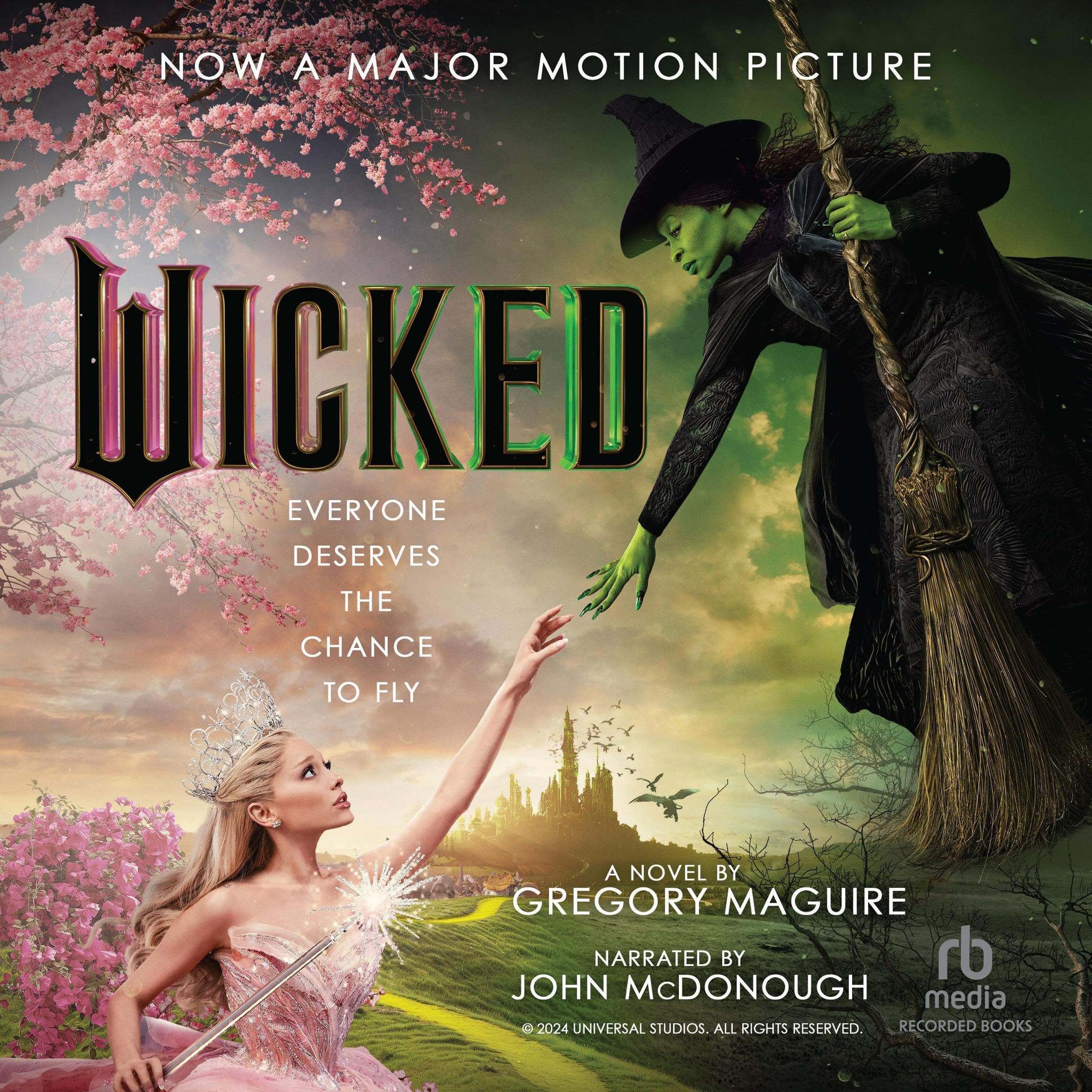
by Gregory Maguire
Born with skin the color of moss and a temperament as sharp as a blade, Elphaba struggles to find her place in a land of Oz defined by political unrest and systemic cruelty. At Shiz University, she navigates the complexities of a charmed inner circle, forming intense, complicated bonds that challenge her rigid worldview. While her peers pursue power and prestige, Elphaba becomes increasingly radicalized by the suffering of the Animals—sentient, soulful creatures being stripped of their rights by the Wizard’s encroaching regime.
As she evolves from an isolated student into a defiant revolutionary, Elphaba finds her convictions tested by the dangerous allure of a forbidden romance. Her journey is a collision of intellectual ambition and visceral longing, forcing her to choose between the life she desires and the moral crusade that brands her a villain. With the Wizard’s secret police closing in, she must navigate a world that demands her conformity while she fights to preserve her autonomy.
This is a story of a woman defined by others' fears, tracing the transformation of a misunderstood outcast into the legendary figure history remembers as the Wicked Witch of the West.
C. AleoYou'll never look at blue gingham the same way again
"I was introduced to the music of the Broadway musical Wicked not that long ago, and was immediately intrigued with the idea of the Wicked Witch of the West not being as evil as she was made out to be in The Wizard of Oz. What if it was the Wizard who was the evil one? The idea of turning such a revered story on its head was too much to resist, and I was pleasantly surprised when my friend starbreiz sent me some items from my Amazon wishlist, including Wicked by Gregory Maguire. ::: There Is Always More to the Story ::: Gregory Maguire's first novel turned one of the most established legends of our time on its ear with its premise: what if the Wicked Witch of the West from The Wizard of Oz wasn't so wicked after all, but was actually viewed that way based only on perception? The story surrounds the life of Elphaba, the daughter of a minister and a woman who wasn't the most faithful minister's wife ever. Her unfortunate tale begins with her birth, when she is born with green skin, teeth so sharp she bites her own skin, and an aversion to water. Her mother turns to herbal drugs, and her missionary father believes that Elphaba's condition is somehow his fault. The only stable figure is really Elphaba's mother's former nanny, who comes to take care of the little green girl. Elphaba's childhood is defined by her father's missionary work in Quadling country, the poorest section of Oz, and a far cry from the upper class of Munchinland to which her mother was born. Maguire picks up the story when Elphaba is older, and a new student at Shiz, the university of Oz. The university is divided into all-male and all-female colleges, and Elphaba ends up rooming with the very snobby Galinda, much to Galinda's dismay. Elphaba quickly becomes suspicious of the headmistress, Madame Morrible, and after an Animal (the walking, talking, intelligent versions, much like the Cowardly Lion) professor dies under mysterious circumstances, Elphaba finagles an audience with the Wizard for herself and Galinda, where she quickly realizes that the Wizard is not the paternalistic ruler he was believed to be. Elphaba sends Galinda back to Shiz and begins a life of resistance, first on behalf of the Animals, then with a life in a convent (or mauntery, as they call it), and finally ends up in the land of the Vinkus, where she creates her famed winged monkeys, begins to dabble in sorcery, and her story intersects with the story of Dorothy that we all grew up with. ::: Politics, Social Classes, Despots... Just Like Real Life ::: Trying to sum up the various plots in Wicked is impossible, and I feel impotent even attempting it. Maguire has created an incredible character and the book will leave you unable to watch the movie the same way again. Not only has he created a rich and sympathetic character in Elphaba, but he has also created a world that seems so real that every time I had to put the book down to do something else I felt as if I was being jolted from one world to another. While at times it might seem as if Maguire is leaving too much out, jumping as he does from one period in Elphaba's life to another, he has chosen the most significant points to focus on; each set of experiences is one that would have shaped the woman who became known as the Wicked Witch of the West. The hardest part of reading Wicked is knowing how it is going to end. From the start, you know that Elphaba is doomed; that she will die at Dorothy's hand, and nothing will change that. Still, even knowing this, you find yourself hoping against hope that Maguire will change the story and find a loophole for Elphaba, that she won't truly die, but live on, fighting the corrupt Wizard and everything he has created. ::: This Isn't Broadway ::: For those introduced to the softer side of Elphaba through the Broadway show of the same name, the novel will probably be a huge surprise. "Based on" is the operative phrase in the description of the musical, which has a far simpler plot than the novel. It would have been impossible to condense all the political intrigue and vast cast of characters in the novel into a musical, and many of the plot devices were oversimplified, including the love affair between Elphaba and Fiyero. The Boq of the novel is, in fact, a Munchinlander who had a crush on Galinda/Glinda, but he plays a far more important role in helping Elphaba in her research for Doctor Dillamond, and later, in helping Dorothy. While I love the show, the book has a much greater depth than the musical, and requires more of the reader than the audience member. Wicked is one of the best novels I've read in a long, long time. I find myself reading it over again, still hoping that Elphaba can be saved, and still getting lost in the world of Oz as Maguire sees it. This is a book not to be missed, and I guarantee that you'll never view blue gingham and ruby slippers the same way again. ["
November 23, 2015 Verified Purchase
E. SmileyI think I got hit by a tornado
"I have a rocky history with this book. Tried to read it as a teen, found it boring, and quit. Then more recently, I saw the musical and loved it! Then I felt like a poser for preferring the lighter and softer version, contrary to my normal tastes, so decided to give the book another try. To my surprise, this time around it was a completely enthralling, intense emotional experience in a way books rarely are for me anymore (and good thing too--I finished more than a week ago and am still recovering). As the subtitle makes clear, this book tells the backstory of the stock villain from The Wizard of Oz--but (I suspect this has a lot to do with its low rating), it's not much like the original children's tale, nor like its own musical adaptation. Oz here is a dark, ugly and all-too-familiar place, rather than a magical fantasyland; people suffer, fail at their endeavors, and die; it's almost nihilistic, although lightened by some humor and absurdities. Readers should also be prepared for a somewhat unorthodox structure: the book covers almost 40 years, which means some significant time-skips, and we see a large chunk of the story through the eyes of characters who aren't actually important (although they think they are, naturally enough, which may make it jarring for some when they disappear). I'd talk about the plot, which I did find compelling, but this is a character-driven book and not especially fast-paced, so I'll cut right to the chase: Elphaba is awesome. Seriously, she is a fantastic protagonist. She's smart, prickly, idealistic, sarcastic, passionate, solitary, complicated, very human and also deeply messed up (okay, those last two are redundant). She is not nice, and maybe even becomes wicked, but she's one of the few people in this book who can see past the end of her nose, and does she ever pay for it. She makes her own decisions, based on her own sense of right and wrong, without depending on anyone for help or advice. So basically, I love Elphaba, which made for some painful reading, but says a lot about Maguire's characterization. Oh, yeah, almost all of the other characters are good too, even if they can't see past the end of their noses most of the time. People are more complicated than they may initially appear, and have complicated relationships, and are anything but black-and-white. The worldbuilding is also enjoyable; it feels early-20th-century (appropriately enough), which is quite different from your typical fantasy world, and Maguire does a good job of developing the society, especially early in the book. There's a lot of politics, and religion, and social issues, which in itself makes the world feel more real and tangible. In the end, though, Oz is meant to be a reflection of our world, and I found the satire quite well-done and not too heavy-handed. For instance, at first it seemed weird that this is such a brutal world, and yet people either don't notice or don't care.... but wait a minute, that's the point. They're privileged white folks and they don't have to worry about it. Thematically, much has been made about how this book will "challenge your preconceptions about good and evil"--and it did make me think, although not exactly in the way I expected. After all, if you're old enough to read Wicked, your idea of "evil" is probably not a children's-book villain in a black pointy hat (a white pointy hat would be another story, but that's not a preconception Maguire wants to challenge, and for good reason). And that there are multiple sides to any story shouldn't be challenging either. For me, this book's treatment of good and evil is best summed up by a dinner party scene, where the diners are confronted with a guest who admits to having just murdered an old woman in her bed. They proceed to have a spirited theoretical discussion about the meaning of "evil," and utterly fail to make a moral judgment about the situation at hand, let alone act on it by, say, calling the police. That's the sort of bizarre and, yes, challenging and disturbing material you'll find in this book. As far as the writing style goes, I've seen it called both great and terrible; I personally found it good in a mostly unremarkable way, but recommend that you sample a couple of chapters before you buy. This will also let you see how you feel about the sometimes grotesque imagery, which seems to be what people are generally referring to when they object to the sex in this book--there are very few actual sex scenes. So, why am I not giving 5 stars? The dialogue, while mostly good, didn't always quite ring true. There are some elements I find unconvincing and/or lame: the infamous "I don't know if I had a baby"; minor characters claiming late in the book to have manipulated significant parts of the plot; Fiyero's blandness (personality-wise, he totally fails to live up to his role in the plot, which I think is the point, but still). On the positive side, some elements I found lame in the musical (girls fighting over boys, blah) are absent here. I could keep talking about this book, but you've probably had enough. So here's the condensed version. Avoid this book if: - You're looking for something light, uplifting, or appropriate for kids. - You want lots of action or a fast-paced plot. - You don't want to see real-world politics, religion or social issues reflected in your fantasy novels. You might like this book if: - You're looking for character-driven, adult fantasy. - You appreciated the darker bits of the musical. - You like fantasy that can make you think about real-world issues in a different light. Clearly, it's not for everybody. I'm just glad I finally read it despite all the criticism--even if it did make me cry. ["
July 23, 2012 Verified Purchase
Tiffany A. HarkleroadA dark, but powerful, allegory.
"Before there was a Dorothy, before there was a twister, and before the Lollipop Guild sang in Munchkinland, a very strange girl was born, a girl with green skin, who was named Elphaba. As a tiny babe, she was a bit savage, and adverse to water. As she grew, she and her sister attended Shiz University, where Elphaba learned that the Animals in Oz were being oppressed. She made it her mission to join the resistance and fight for what is right and good. Though she seeks to fight the evil forces, those forces instead force her to the margins of society and vilify her to the point that she is deemed a wicked witch. Wicked is a revisionist view of life in the land of Oz. As a fan of the Oz stories in both book and film since childhood, it only made sense to me that I give this alternate viewpoint a chance. My first exposure to this story was actually through the musical, which is quite different from the book. Where the musical is somewhat lighthearted, with a happy ending, the book is a dark allegory for past and current political actions throughout the world. With the Animals in Oz being marginalized and repressed, one can see parallels to the Nazi treatment of Jews, as well as society's treatment of gays and lesbians. We constantly see the struggle between good and evil, and evil does not always look the way we expect it to look. Being different, whether because you have green skin or because you are a talking Animal, is ultimately deemed bad in the book, just like in society, and those who are different must be isolated, and if need be, punished. The book is extremely dark, and it has significant political undertones which made it a little difficult to read. In fact, I had to walk away from the book for several weeks, and return to finish it later. It is funny, books with monsters like werewolves and vampires do not bother me as much as this one did. When the monster is hatred or bigotry, and wears a face like you or I, it is much more disturbing. Though it shares ties to childrens' books, this is clearly not intended for a young audience. There are adult themes, and some pretty serious violence. Readers will appreciate this book much more if acquainted not just with the popular Oz movie from the 1930s, but also the original Oz books. Having read several of the Oz books, I was better equipped to recognize the mythology and characters from Oz. One thing that I did have trouble wrapping my head around were the different religions of Oz. I think there is a lot at play within the book, and it probably takes more than one reading to really allow it all to sink in. ["
September 22, 2011 Verified Purchase
Azuree Riordan"Wicked"...A fairy tale for adults
"I saw the musical "Wicked" in May 2006, and decided to give "Wicked" by Gregory Maguire a try. *Warning: Spoilers are to follow* It's difficult to convey my feelings on this book. On one hand, I think the idea of a 'true story' of the life of Elphaba "The Third Eminent" Thropp is intriguing and brilliant, since it provides proof that sometimes there are rational explanations for seemingly irrational circumstances and behaviors. (Why was Elphaba green? Why was Elphaba eventually labeled Public Enemy #1? What was so special about Nessarose's shoes that The Witch wanted them so much?) Of course I knew how the story would end, but at least there was no misunderstanding how and why everything happened the way it did. On the other hand, there were times when I closed the book for a few days and forced myself to continue because there were so many questions and not enough answers, or the answers were delayed by unimportant happenings. How did Glinda *really* become the 'Good Witch of The North'? (She stayed at Shiz and became a sorceress, but what actually led to her elevated position?) What really happened to Fiyero? (Here's a hint for those who saw the musical: Chances are, he wasn't *The Scarecrow*...he's presumed dead but in fact, we never find out for sure!) If Elphaba truly had an aversion to water (Examples: When she cried, her tears 'burned like fire'; she had no running water in her loft because she 'didn't use it'), then how was she able to drink water-based beverages like tea, ale, and at one point lemon-barley water? (Could she just not touch it?) While some questions were in fact answered adequately, more questions arose and were left to ponder over, and that was frustrating at times. The biggest question, of course, was Liir's background: First, it was strongly hinted at that he's Elphaba's son with Fiyero (she even acknowledges that possibility at one point in the story); later on, we're led to believe that since he looks nothing like Elphaba or Fiyero, he's really some orphan that the maunts stuck Elphaba with to get them both out of their lives forever. At the end of the story, there's yet another 'flip-flop' as we're told that after Elphaba's death, Liir went 'to look for his half-sister Nor' (as in not 'his possible half-sister' but his 'half sister', as if it was the answer we're looking for...but again with no valid explanation). It's a very simple question: Was he or was he not Elphaba's son? If he is, shouldn't his character hold more importance since he is her living legacy? If he's not, what exactly is the importance of his character? We never find out! (I'm in the process of reading the sequel, so I hope this mystery is finally cleared up) Overall, I suppose the book is worth a read for those who like their fantasies dark, but I feel that I must add this advice: If you have seen the light-and-airy Broadway musical that was (VERY, VERY) loosely based upon this story, you may be disappointed and even bored with the serious tone and bleakness throughout this book; if you haven't, then you may find this book fascinating and enlightening, and find the musical to be silly trash. Another bit of advice: This is NOT a children's book. Despite the all-too-familiar illustration of the two witches on the cover, there is much mature content that should not be read by people under the age of 16 (My 8-year-old niece recognized the cover and wanted to read it, and I had to explain that it was a 'grown-up book'). I say this not because of the sexual content (Although there's no shortage of that) but because of some of the more realistic undertones hinted at throughout the book. (politics, questioning good and evil, etc.) If you decide to read this, take a bit of precaution, and prepare to hear The [Shocking] Other Side of The Story. ["
October 22, 2007 Verified Purchase
Sarah J. Maas
Jaysea Lynn
Kate Golden
Sangu Mandanna
Kayla Edwards
Jaymin Eve