 Find Romantasy Books
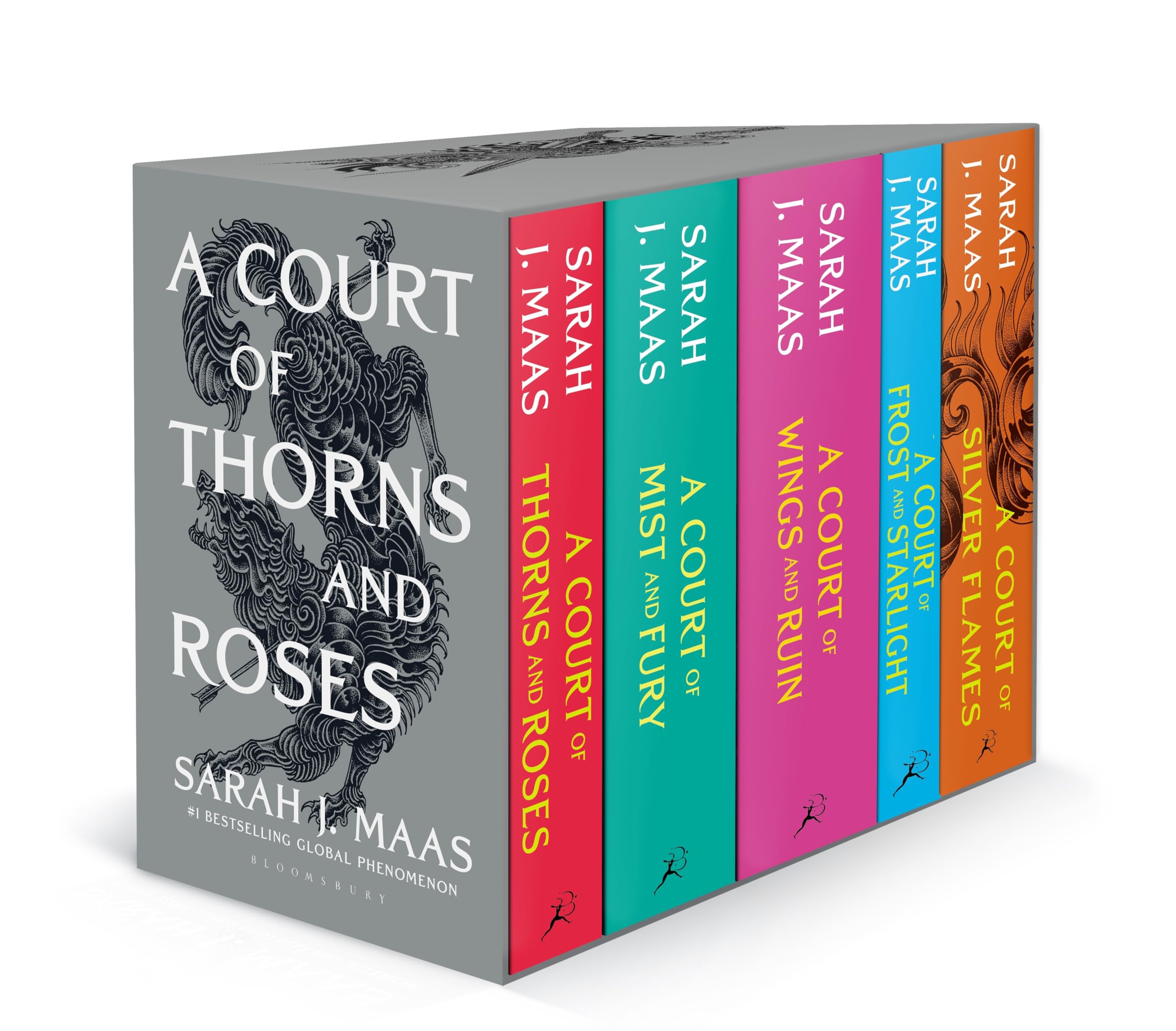
A Court of Thorns and Roses Paperback Box Set (5 books)
Sarah J. Maas
4.8

by J.R.R. Tolkien
Hidden within a secret valley, the magnificent city of Gondolin stands as the final bastion of hope against the encroaching darkness of the dark lord Morgoth. Protected by the divine influence of the sea-god Ulmo, the city remains an unreachable enigma to the forces of evil—until the arrival of the mortal wanderer Tuor. Sent by Ulmo to serve as a catalyst for a desperate resistance, Tuor embarks on a perilous journey that leads him to the gates of the hidden kingdom.
There, he finds his destiny entwined with Idril, the daughter of King Turgon. Their burgeoning love serves as a beacon of warmth amidst the mounting tension of a world on the brink of collapse. However, the shadow of treachery looms, threatening to expose the city’s location and unleash the full, devastating might of Morgoth’s armies, including Balrogs and dragons.
As the gods debate the fate of Middle-earth, Tuor and Idril must navigate the burden of prophecy and the fragility of their union. This is a tale of epic sacrifice and enduring legacy, following the last stand of a legendary civilization and the desperate flight of those who carry the future of the world in their arms.
John D. CofieldThe Last Of Tolkien
"A young British army officer, drawn and pale after a severe bout of trench fever, lay recuperating in hospitals for months in late 1916 and 1917. Although his body was weak his imagination and intellect remained strong, and he began writing out a story which had been haunting him. A beautiful city in a hidden mountain valley occupied by Elves (or Gnomes as he then called them); a powerful enemy searching for the city with every demonic force at his disposal; a noble wanderer who finds his way to the city, falls in love with its king's daughter, and becomes one of its chief defenders; the city's betrayal by an envious relative of the king; and finally its capture and destruction by bestial warriors using horrible metallic weaponry, leaving only a few survivors, including the hero and his family, to make their escape. That young officer was John Ronald Reuel Tolkien, and the tale of the Fall of Gondolin became a central part of the mythology he had determined to write for England. Tolkien wrote and rewrote The Fall of Gondolin several times during his lifetime, though he was never able to produce a final version which completely satisfied him. After his death in 1973 his son Christopher assumed the task of organizing and finishing his father's mythology, publishing The Silmarillion in 1977, a twelve volume "History of Middle-earth" containing most of his father's versions of his various tales during the 1980s and 1990s, and more recently three single volumes devoted to the "Great Tales"of The Children of Hurin, Beren and Luthien, and now The Fall of Gondolin. In the preface to this final volume Christopher wrote that "in my ninety-fourth year The Fall of Gondolin is (indubitably) the last," bringing tears to my eyes and to those of his countless other admirers, but also inspiring our admiration and deep gratitude. The Fall of Gondolin consists of a number of different versions of the tale written by Tolkien at various periods. There are inconsistencies in some of the names, and inevitably characters and events appear, vanish, sometimes reappear or are heavily altered. One aspect remains apparent throughout: the sheer beauty of Tolkien's writing. This is especially impressive when we remember that Tolkien first wrote of Gondolin in his mid-twenties. Accompanying and enhancing Tolkien's words are the magnificent illustrations provided by Alan Lee, including eight color plates and many smaller drawings at the head of each chapter. Christopher Tolkien provides explanatory Notes throughout the book, with more Notes and additional material at the end, including a lengthy annotated list of Names, a Glossary of English words used by Tolkien which are now considered obsolete, archaic, or rare, and a short genealogy and map. He also includes a short quotation from The Hobbit which made me somewhat teary-eyed, as many years ago that book was my first introduction to Tolkien and the very first reference to Gondolin. The Fall of Gondolin and the two other Great Tales are indispensable for Tolkien scholars, but those who are just beginning their journey through Middle-earth, Beleriand, and Valinor in the First Age would be better served by starting with The Silmarillion. As most who read and love him can attest, Tolkien's words never grow stale. ["
September 2, 2018 Verified Purchase
Philip CovitzThe tale of Gondolin finally gets its due
"If you are the kind of Tolkien fan who is fascinated by the Silmarillion, this is a must have and makes a beautiful trilogy alongside the Children of Hurin and Beren and Luthien. It really makes me wish Christopher Tolkien had taken the liberty of rewriting some of it so it could have been better incorporated into his version. The account of the battle is so wonderful, it’s a crime it never made it into the finished Silmarillion. A few name changes here and there and it could have been made to fit with the other Silmarillion material. Oh, well. I’ve always loved the tale of Gondolin as much as the tale of Beren and Luthien, but it gets such sadly short shrift in Tolkien’s other published works... even though it appears as early as The Hobbit, when Elrond discovers the identity of Gandalf and Thorin’s swords. The account presented in this book makes up for that, it is thrilling to read and full of beautifully rendered details. It’s such a romantic story, and so full of beauty and adventure, and tragedy and hope. I’d almost say it was even better than Beren and Luthien, but that story is more about true love and is more intimate, whereas the Fall of Gondolin has a broader scope, since it involves Morgoth’s destruction of the last Noldorin stronghold. I think the fact that it culminates in Eärendil’s birth also makes it special, since he was saved from the ruin to later become the savior of Middle-earth and the scion of the kings of Numenor. These books are like the Iliad, the Odyssey, and the Aeneid of the Elder Days. ["
January 8, 2020 Verified Purchase
Marcel DupasquierThe different versions of the story of the Fall Of Gondolin
"I’ve started to read this book after I had read Beren and Lúthien in the same series and had enjoyed it more than I thought I would. Before reading it, I had the idea like, now I read the same story of Beren and Lúthien maybe three, four times, that cannot be interesting. At most I will give that book four stars. I gave it in the end five stars: It was the same story of Beren and Lúthien repeated over and over, but reading a poetry version of it was quite ingenious, and also reading the first version with Tevildo was fun. Therefore, I have now also started to read this book. Even though the book sets out to present the versions of Tuor’s story in a chronological way, starting with the first one and ending with the last, I will start my review with the last version, simply as I had read it previously. The last version, sometimes also called “Of Tuor and his Coming to Gondolin”, because it breaks off at the point of Tour and Voronwë arriving at the seventh gate, ready to see the hidden city, was likely written in 1951, and I had read it before. Twice actually. Because it was relatively worked out, it had previously not only been published in the “Unfinished Tales”, but it had also been translated into my mother tongue and then published as a stand-alone booklet. As a consequence, I had read not only this story in about 2000, it was good but apparently unfished and given there without context, but also again in 2011, when I had ordered and tried to read the “Unfinished Tales”, where I got really confused, as I had the strong feeling that I had read this story previously. Because I could not shake this confusion, but I could not understand and therewith resolve the situation, either, I actually had stopped reading the “Unfinished Tales” at that point. The “Unfinished Tales” remains thus in my to read-pile, but while reading this book I did not want to read this story a third time. The book actually starts with the first version of this story, originally titled “Tuor and the Exiles of Gondolin” later to be renamed “The Fall of Gondolin”. This version had been written in 1916 or 1917, was revised several times and then probably presented in 1920. The differences to the last version are striking. The world is much less well developed. Tuor still grows up in Mithrim and then leaves westwards via a tunnel that a river had carved into the mountains. He arrives in the west on the shore of the sea and stays there for a while, not finding here the weapons of Turgon. He then heads south-east(?) until he reaches the Sirion. Following the Sirion, Tour treks southwards until he reaches the marshes of the Sirion. Here, he stays for a while in the lovely climate of the south, until Ulmo travels up to him in a carriage drawn by a narwhal and a sealion and plays to him on an instrument made up of many long and twisted shells. He then tells him to go to Gondolin, just as in the last version. He heads again northwards and meets there many elves, most of whom desert him again except Voronwë. Voronwë recognises the door to the hidden city and together they go through. Thus, in a little bit more than ten pages, Tuor reaches a point, which takes him in the last version about 50 pages. But besides this, it is also interesting how less developed Beleriand is. The distance that Tuor travels would on the developed map of Beleriand take him many months. In the last version. He basically travels west to the shore, sees there Ulmo standing in the see and then travels back east. And about the depiction of Ulmo like in The Little Mermaid we don’t have to talk. Once Tuor enters through the gate, only one gate here, no seven gates, we get here the rest of the story that did not make it into the version of 1951. Probably, as Christopher Tolkien thinks, because his father did not want to have to think about the destruction of Gondolin again. This is a pity as it’s a really good story. Tour asks and is sold the seven names of Gondolin. He is brought to king Turgon, where he meets Turgon, his daughter Idril and his nephew Meglin. Tuor speaks the words that Ulmo had put on his tongue: He talks about the coming doom of Gondolin and presages its fall. He requests Turgon to evacuate the city, as long as there is still time. But Turgon doesn’t want to listen, he holds the walls of Gondolin for impenetrable. Thus, Tuor stays in the city and lives in a house next to the wall. He and Idril fall in love and finally marry. This to the displeasure of Meglin, who had wanted Idil for himself. Tour and Idil resolve to build a tunnel from Tuor’s house to the Encircling Hills, not to the Way of Escape as they reckon it would fall first and therefore become a trap. Years pass, Tuor’s and Idril’s son Eärendil grows up to a boy. One day, Meglin is caught by Melko(r)’s and in order to save his life, he betrays Turgon and gives away all secrets. Meglin goes back as not to raise any suspicions, and everything goes on as normal. Year later, the hills in the north suddenly shone as if ablaze. Melko was finally making his move. Tour pushes Turgon for a sortie but Turgon, also encourages by Meglin, still thinks nothing will penetrate the walls. The troops of Gondolin man the walls and wait. And then see that it was a mistake. Melko has brough iron serpents that crawl up the walls and ram them to break holes into them. And here, I could really see the influence of the First World War on Tolkien’s writing. Generally, it is assumed that the two World Wars have inspired Tolkien to his writings on Middle Earth. Generally, I think this can be dismissed but here, on the attack on Gondolin, I could feel the coming of tanks onto the battle fields of Northern France. The troops of Gondolin have to fight and are clearly in the minority. We get thus epic battle scenes and the Goldothlim are more and more losing. In the end, Turgon stays behind fighting until the last breath, whereas Tour, Idril and Eärendil with a few men escape through the tunnel. They have to stay out of sight but happily, the fog and smoke of the burning Gondolin help them. In the end, they reach the southern hills and start to cross them through the Cleft of Eagles. Unfortunately, Melko has put a guard all over the Encircling Hills, and they are caught. The vanguard has to fight their way through and now also the rearguard is attacked. What is worse there, there is a Balrog among the attackers. Happily, the eagles of Thordondor get involves and they attack the Orcs in front. And in the back, Glorfindel fights an epic fight against the Balrog. Like Gandalf centuries later, Glorfindel manages to overcome the Balrog but falls thereby. The survivors eventually journey south make it to the mouth of Sirion. There, this first version ends. Then we get very short extracts from the earliest text, barely five lines, and from the Tale of Turlin, and the Exiles of Gondolin. This extract is already three pages long, it talks about Ulmo, who wants to get the Valinor involved into the fight against Melko(r) and therefore wants to recruit Turlin (Tuor). It ends when Turlin (Tuor) leaves Mithrim and comes out of the dark passages in the mountains into the light. Next, like already done for Beren and Lúthien, Christopher Tolkien cites the extracts for this sorry from the “Sketch of the Mythology”, also called ‘the original Silmarillion’ written in 1926, and the Quenta Silmarillion, versions QS1 and QS2, here version QS2 is given. These narrations contain only minor changes to the original Tale. On the one hand, Tuor’s genealogy is changed and he’s now the cousin of Túrin. On the other hand, the one big change is that whereas in the Fall of Gondolin, Gondolin had been established ages ago, now, Turgon and his people were survivors of the Battle of Unnumbered Tears, who had found the place by coincidence and established Gondolin recently. But I don’t want to make too many comparisons, as this is exactly what Christopher Tolkien does in the 35 pages following “Of Tuor and his Coming to Gondolin” in the part called Evolution of Story. Christopher Tolkien makes such a deep analysis that I would never want to do myself. And here, I then also wondered why this book was published. Had I already asked myself this while reading Beren and Lúthien, I was really impressed that there is a version of that story in verse form. And when I wondered why it had never been published, I realised that it had been published: now. With this book, however, there is no such hidden jewel. There are just different versions of the story of the Fall of Gondolin in prose form. Therefore, this book was really published to show the evolution of this story. In the end, Christopher Tolkien gives two version of end of the story, the tale of Eärendil; one from the Sketch of the Mythology and the other one from the Quenta Noldorinwa. Again, the stories are kind of known, but there are differences. In the Sketch of the Mythology, it is not Eärendil who goes to the Valar to ask for forgiveness and help against Morgoth, but Ulmo. Eärendil even though having some adventures with his ship, such as slaying Ungoliant in the south, is then just looking for Elwing. Elwing on the other hand had thrown the Nauglamir with the Silmaril into the sea, and Eärendil would thus carry another one with him. Eärendil in the end does find Valinor but does not dare to enter the island further. Moreover, he and Elwing just have one son, Elrond. I could not help here but thinking that this was a lost chance, Eärendil finding Valar but not interacting with the Valar, and it seems, J.R.R. Tolkien in the end thought the same. Next, we have form the Quenta Noldorinwa the version Q II. This version is probably quite true to the version in the published Silmarillion. Here Ulmo does plead with the Valar but it’s not enough. One has to come to plead for the weary Elves and Men. Moreover, Elwing with the Nauglamir upon her breast flies to Eärendil who does gets in the possession of the Silmaril. He sees no sense return to the Sirion and searches for Valqinor again. With the Silmaril bound upon his forehead he does find it. He again doesn’t dare to enter too deep, but this time is summoned by Fionwë, son of Manwë. Upon Eärendil intercession, the Valar and the Light-Elves gather to move against Morgoth under the leadership of Fionwë. Morgoth is overcome and chained in the void beyond the walls of the world. Eärendil builds wings to his ship and contributes to the fight. Later he sails together with Elwing over the sky as a new light star, always checking the door on Morgoth. Fionwë also recovers the two Silmarils but Maidros and Maglor, true to their oath, demand them to be handed over. When Fionwë demands them to come with him back to Valinor to submit to the judgement of the Valor, they slay the guards and steal the Silmarils. However, they cannot hold them anymore. The Silmarils burn their hands unbearably. Maidros thus throws himself into a volcano, whereas Maglor throws his Silmaril into the sea, to wander restlessly over Middle-earth. Valor and most Elves depart for Valinor, decreeing that Middle-earth is for Men. And with this the story ends, as was at that time no third and no third age. And I can now go back and finish the Silmarillion. I will read about the third great tale, about the Children of Húrin, at another time. Unfortunately. I had interrupted the Silmarillion at the part pf Tuor and Fall of Gondolin. And afterwards, the story of Eärendil will follow. It will thus be quite some repetition for me. ["
November 15, 2024 Verified Purchase
Glynn YoungA heart-staring story, with all the Tolkien themes and devices
"Gondolin is a city created by elves, hidden away in the mountains, the last outpost of light in the First Age of Middle-earth, when the evil forces of Morgoth have conquered almost everything else. Morgoth knows this city must exist, and he regularly sends search parties of orcs to find it. Its end is almost inevitable, and the story of that end is told in “The Fall of Gondolin,” the last of the unpublished tales of J.R.R. Tolkien. Opposing Morgoth is Ulmo, the god of the sea, who raises up Tuor of the race of men. Tuor undertakes three great journeys in his life. The first is his journey from his own homeland toward the sea, subconsciously hearing the call of Ulmo. The second is his journey to Gondolin, where he comes to live and marry Idril, the daughter and only child of the elvish king. Tuor and Idril have a son, Earendil, who, outside the arc of this story, will have a son named Elrond of Rivendell, a main character of “The Lord of the Rings.” Tuor’s third great journey will be to lead his family and a small remnant of the elves of Gondolin to safety, after the destruction of the city. And thus ends one of the great publishing stories of modern times, a story that began in 1937 with “The Hobbit,” crested in the 1950s with “The Lord of the Rings” trilogy, and then continued after Tolkien’s death with the publication of “The Silmarillion” in 1977, the 12 volumes of “The History of Middle-earth” (1983-1996), and the three stories of the First Age – “The Children of Hurin” (2007), “Beren and Luthien” (2017), and now “The Fall of Gondolin,” just published August 30. That we have all of these stories since “The Lord of the Rings” is due to Tolkien’s son and literary executor Christopher Tolkien, who has served as editor for all of his father’s publications since Tolkien’s death in 1973. Christopher also edited his father’s non-Middle-earth stories, poems, and translations, including “The Legend of Sigurd and Gudrun” (2009), “The Fall of Arthur” (2013), and “Beowulf: A Translation” (2014). What Christopher, now 94, has accomplished is no small feat; all of these posthumous works have required extensive editing, research, and text comparisons. Christopher Tolkien says that his father began to write “The Fall of Gondolin” in 1916 or 1917, during World War I. The text version he uses for this publication was written longhand by his father in 1925 and typed by his mother, Edith. But to publish it properly required comparison of texts, versions, notes, and other materials, and Christopher describes it the book (the story itself is 57 of the 304 pages). The edition includes eight plates of illustrations by artist Alan Lee, which are both true to the spirit of Tolkien and his artwork and a profound reinterpretation. “The Fall of Gondolin” includes trademark Tolkien themes and devices. We see the unleashing of dragons, balrogs, and orcs against the city of the elves. We watch the treachery of the king’s nephew. We read the great battle scenes at which Tolkien excelled. And we experience the sorrow and determination of the hero, in this case the man Tuor, leading the few survivors to safety. (Tolkien always managed to save a remnant, a pointed reminder that, in the long run, superior numbers are not always decisive.) It’s a heart-stirring story. It’s also evidence, as if we needed more, of what one man’s imagination produced. ["
September 11, 2018 Verified Purchase
Sarah J. Maas
Sarah J. Maas
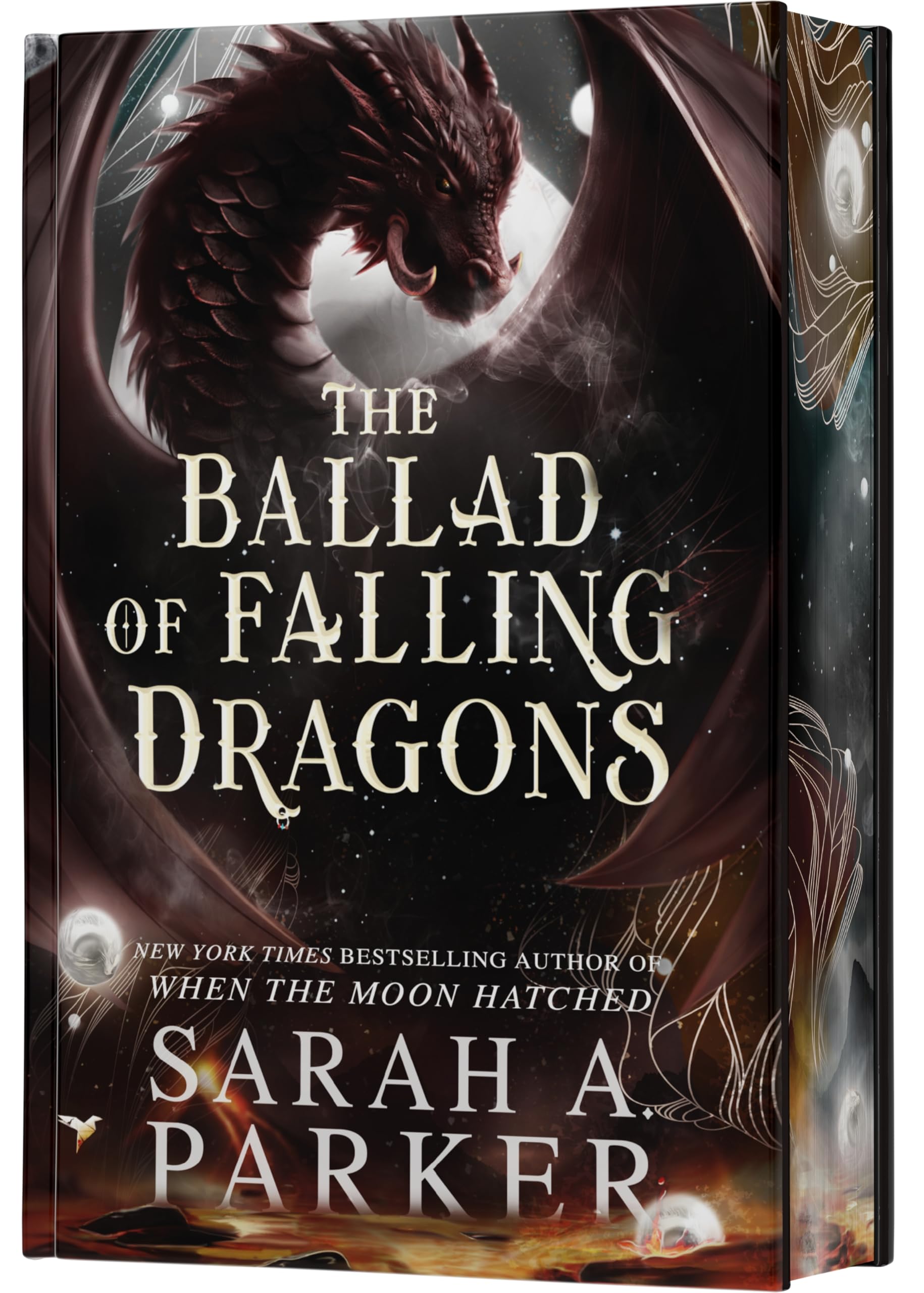
Sarah A. Parker
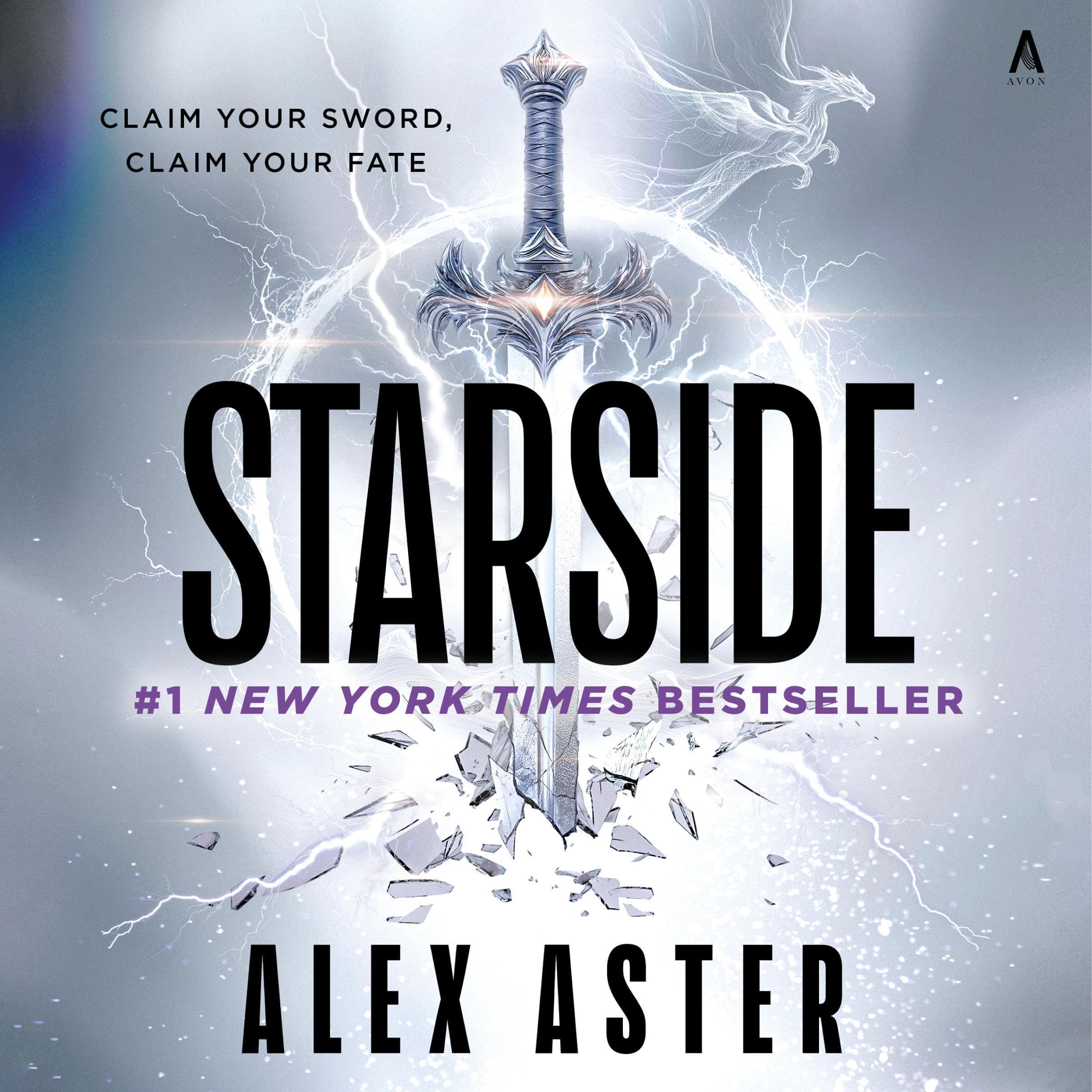
Alex Aster
Devney Perry
Sarah J. Maas
