 Find Romantasy Books

House of Earth and Blood: Crescent City, Book 1
Sarah J. Maas
4.7

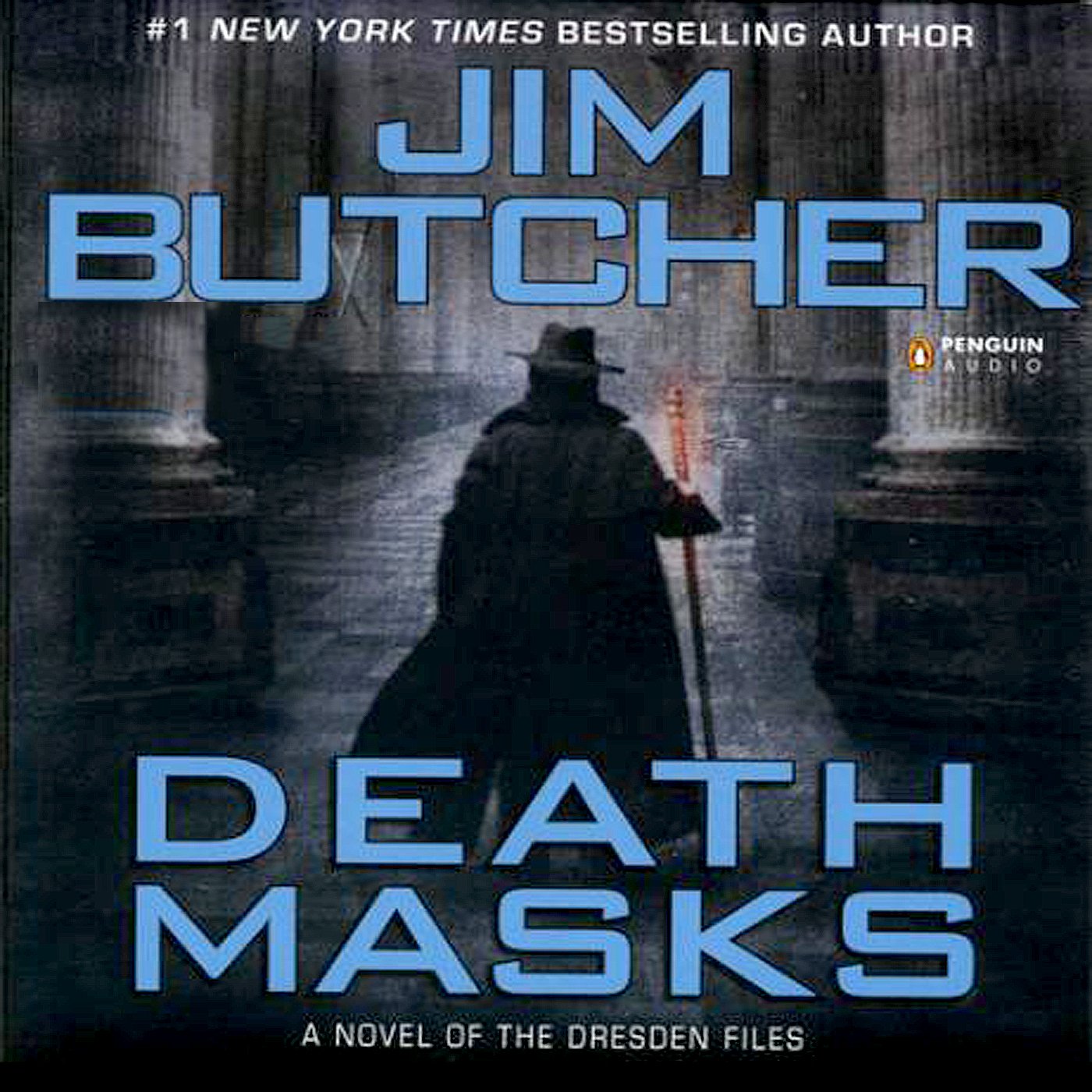
by Jim Butcher
Harry Dresden, Chicago’s only wizard-for-hire, finds his loyalty pushed to the breaking point when a vengeful vampire blackmails him. To protect his closest ally, Karrin Murphy, from professional ruin, Harry must enter a high-stakes scavenger hunt for the Word of Kemmler—a legendary text of dark magic capable of granting god-like power. The stakes escalate rapidly as Harry discovers he is not the only one hunting the artifact.
Six ruthless necromancers have converged on the city, turning Chicago into a battlefield for the occult. With Halloween approaching—a night when the barrier between the living and the dead is at its thinnest—Harry must outmaneuver these masters of death before they can unleash an apocalyptic ritual. As the body count rises and the supernatural shadows lengthen, Harry’s bond with Murphy is tested by the crushing weight of his secrets and the lethal threats closing in on them.
Caught in a frantic race against time, Harry faces a grim reality: to stop the coming slaughter, he may have to walk a path as dangerous as the enemies he pursues. In this urban fantasy thriller, the line between hero and monster blurs as Harry fights to keep his city from becoming a graveyard.
AmyOne of My Favorite DF Books
"I have been reading (and mostly rereading, because I stopped keeping up with the series after Changes) the Dresden Files for years and this is one of my favorite books of the series; it's tied with Summer Knight for absolute fav. Whereas my favorite part of Summer Knight is the focus on the nonhuman characters - particularly the Fae, who I think are really well written as an amoral Other rather than just plain evil nonhumans - what I like about Dead Beat is the focus on some of Harry's best qualities: his dry and sarcastic humor (this book reads as very funny to me) as well as his ability to think on his feet and use adaptability to face and change situations that seem hopeless (the entire situation with the necromancers; just: all of it). I also really like the supporting characters in this novel (Thomas Raith, a White Court vampire who's also Harry's half-brother, and Waldo Butters, an ME who's a recent addition to the in-the-know crowd), the twisty-turny plot (first this, then that, and oh look someone finally thought to take advantage of certain downsides to magic), and the fact this book is more reflective on certain parts on the Dresdenverse than other books have been (everything from wizard healing to the meaning of choice to the actual function of the Wardens gets a mention). What I don't like about the Dresden Files - that Dresden himself is a sexist ass, which doesn't change even though it does get less pronounced with certain characters over time (I'd forgotten about Murphy helping destroy nest of Black Court vampires in the book before this one) - is less pronounced in Dead Beat for one reason: the lack of female characters. This is something I'm torn on. I'm happy that, at least for one book, Dresden's patronizing chauvinism plays a relatively minor role and I didn't have to put up with it for long as there are exactly five female characters in this book that play any role - Murphy (who goes off to vacation in Hawaii at the very beginning of the book; she's completely uninvolved in the rest of the plot), Mavra (a Black Court vampire blackmailing Dresden for the plot's macguffin who shows up for two scenes that bookend the novel), Kumori (an apprentice to one of the necromancers, supposedly in the service of eliminating death), the Corpsetaker (one of the actual necromancers and who only counts on this list because they're in a stolen female body for most of the book), and Shiela (the imprint of the Fallen Angel Lasciel) - and, of the five, only Shiela/Lasciel recur more than a few times and are meant to be anything other outright villains. The characters are there (in that have at least one scene and they're named), but have little in the way of actual characterization; they read less like people and more like archetypes (Lasciel is the Temptress, Kumori is the Misguided Girl, etc). This is like saying 'Well, if example-MC treats nonwhite characters in racist ways, just have fewer nonwhite characters, put them in smaller roles meant to do/symbolize specific and discrete things - thus having a smaller range of potential interactions - and that aren't meant to be have good connotations anyway; problem solved.' As this would not 'solve the problem' of the example MC's racism, such similar treatment of female characters in Dead Beat does not appropriately deal with the issue of Dresden's sexism. Though somewhat masked, it's still there and will still return full force in later books. ["
April 21, 2021 Verified Purchase
DocFantastic!
"Dead Beat picks up perhaps a year after the conclusion of Blood Rites, with protagonist Harry Dresden suffering through his daily life of paranormal investigations with the use of only one hand, since the other was hideously burned in the prior book. His erstwhile love interest, Karrin Murphy, has taken up with someone Harry considers to be a bad man, and she goes with him out of town. This is fortuitous timing, since Mavra, Harry's old Black Court vampire enemy, shows up to blackmail Harry into helping her. The cost of not doing so will be Mavra releasing to the police photos of the climactic fight in Blood Rites, when Murphy killed some of Mavra's human thralls. Harry takes the task to find for Mavra the one copy of a rare book by a long-dead necromancer or terrible power. Harry is only one of several wizards seeking the tome, the others all being necromancers themselves. They need the knowledge in the book in order to become a god through a dread rite on Halloween, which also happens to be Harry's birthday. Happy birthday, indeed. Harry is saddled with doing the vampire's dirty work, fighting the various necromancers (who are also opposed to one another), trying to find clues to the long-lost book's location, taking care of his half-brother (which fortunately is mutual), jousting with the demon-seed in his brain from when he picked up the silver coin of the Fallen a few books back, and trying to shepherd his medical examiner friend Butters. Butcher does a wonderful job of updating a newcomer to the series on how things came to be as they are, so if this is the first in the series for you, you will not be lost at all. For those who might have had some time between books, this catches you right back up. Since there are references not just to Blood Rites, but to nearly all books in the series, the constant reminders are great and fit well into the story as being told by Harry. One thing that takes only slightly away from these books is the fact that Harry is the narrator, so while he always gets brutalized and things rarely ever work out according to his best-laid plans, the reader knows he will survive. That's why he usually has companions after whom he must look, so that there is a genuine risk of life to SOMEone. Nothing makes this a bad book. It's got a big page count (420+), great action, well-thought out plot, excellent characters, good development of the characters and their interpersonal relationships, good introduction of new characters, and excellent plot points scattered here and there to lead to future books in the series. This is another top-notch winner. ["
September 9, 2010 Verified Purchase
Kindle CustomerAnother good Dresden book
"Yet again Harry is called on to save a good chunk of the world from things that go bump in the night. Since a couple of books back, when Harry managed to grow himself some balls, I have taken quite a liking to this book series. Harry have become quite a badass and I like his sharp tongue and rather dry and dark comments. Unfortunately he is not not always as a sharp-witted as he his sharp-tongued and he does indeed put his foot in it and, in particular, gets sucker-punched a wee bit too often. The book starts with Harry getting forced (suckered) into looking for the, apparently, famous Word of Kemmler. Well, famous in certain circles that is. Circles that have a rather unhealthy interest in dead things. Dead things that won’t stay nice and quiet in their coffins like well-behaved dead things should do. To everyone’s great surprise (not really) a number of other interested parties are also looking for the Word of Kemmler. Parties that believe in simple solutions when it comes to competition, like a not so healthy dose of violence followed by sudden death(s). What can be better in order to promote some violence than help and already brewing war take off in earnest. So soon Harry finds himself in the middle of another fine mess…again. As usual the book is nicely written with plenty of action, lots of bickering between Harry and his friends and all kinds of magic and supernatural beings crawling, stomping or flying around. Although Harry gets sucker-punched a couple of times he does bounce back and this time he is doing it in style venturing into some rather black magic as well as bending the rules of the White Council in some rather innovative ways. Too bad Harry could not replace that old crappy Beetle of his with his new “ride” permanently. Yes that is very cryptic but writing anything more specific would be a mega-spoiler for what I personally think is one of the best moments of the book so you have to read it for yourself. The one thing that I really did not like was Morgan’s behavior. Not that this was much of a surprise since he must be one of the most disagreeable and thickheaded bastards in this book series. I disliked him even more than usual in this book though when he got one of his outbursts in the middle of some critical events. Even afterwards, when he had soundly been proven wrong, he behaves like an arse. Anyway, on the whole a very enjoyable book. ["
February 25, 2015 Verified Purchase
Nicholas KingDeat Beat: Compromise for Victory
"As Jim Butcher continues the Dresden series, the sensation of accumulated damage leading to massive shifts in the setting and characters are becoming more apparent. In Dead Beat, Dresden is put into a position where compromise is essential for his survival. The plot of the novel is a step up from Blood Rites, with stronger antagonists and a brief return of a wonderful villain. The underpinning of the plot is a story of a man taking his first step into the abyss of moral ambiguity. In case it's not apparent, there's going to be some spoilers going forward. Back in book five (Death Masks), Harry Dresden made a decision to pick up a coin. Innocuous enough if the coin had not been the fetter of Lasciel, a fallen angel of the Order of the Black Denarians. In Dead Beat Dresden must confront the consequences of that decision. Despite putting the coin behind a powerful binding, a shadow of Lasciel has inhabited Dresden's mind. One after-effect of this indwelling is Dresden's magic being augmented by Hellfire, a powerful otherworldly substance. As a character Dresden has always been a hero. He's practical and pragmatic to a degree but he's always been written by Butcher as possessing a strong moral center. In past novels, Dresden has been offered greater power but always turned it down. In Dead Beat, Butcher puts his main character into a fight Dresden simply cannot win. Rather than use a deus ex machine or some outlandish new power that appears simply to resolve the plot, Butcher has Dresden compromise his moral center just a bit to give himself a fighting chance. Dresden agonizes over this decision but he comes up with the necessary rationalization. Lasciel's shadow is an intriguing addition to the Dresdenverse. Temptress seems to be the easiest designation but that would be rather simplistic. Lasciel is cunning and I would venture to say she has the potential to be as diabolical as the Denarian attached to Nicodemus. While she makes multiple statements to her desire to simply help Harry, Dresden and the readers are left with the overwhelming feeling there's more behind her pleas. It's an interesting development and I'm looking forward to how it grows in future novels. Speaking of interesting developments, Dead Beat progresses the war begun in Grave Peril to a zenith. One of the downsides of a first-person narrative is the lack of scope and scale. Having an overarching metaplot is excellent but with a first-person narration it requires characters to arrive and become exposition-heavy talking heads (as opposed to Bob the Skull, who's a tongue-in-cheek talking head). Butcher handles such scenes well. The war update in Dead Beat drags on a bit too long but it serves a necessary purpose. Butcher is setting the stage for the war with the Red Court draw to a close but it's a conflict that will leave the universe Dresden lives in worse for the wear. The novel has the excellent set-piece moments a reader should expect from the Dresden Files. The title reveals plenty of the story elements. Butcher makes good use of the undead in this book. The standard zombies make an appearance as well as ghosts. Butcher uses the undead in a fashion similar to other supernatural in this series: he highlights how terrifying they can be. It wouldn't be a Dresden novel without a fair amount of wisecracks and witty banter. Butcher devotes a good chuck of the opening to bringing Butters (a recent addition to the mundane human cast) into the fold fully. The conversation between Dresden and Butters concerning this universe's version of the Masquerade is the first time Butcher has put the concept on paper in full detail. It's a minor point for me (having read enough stories that use a Masquerade of some kind) but one I felt needed to be detailed. For others new to this concept, it might be a little difficult to swallow, especially considering the events of the novel. I enjoyed Dead Beat as much as I've enjoyed the other books in the series. I can see some of the end-game threads start to form. Butcher is laying in place the foundation for the next several novels and the war that has consumed much of what Dresden cares about. To say I'm intrigued is a vast understatement. Seven books into this series and I still find reasons to enjoy it and to keep reading. I definitely recommend Dead Beat and would suggest getting into the Dresden bandwagon. ["
March 23, 2014 Verified Purchase
Sarah J. Maas
Jaysea Lynn
Kate Golden
Sangu Mandanna
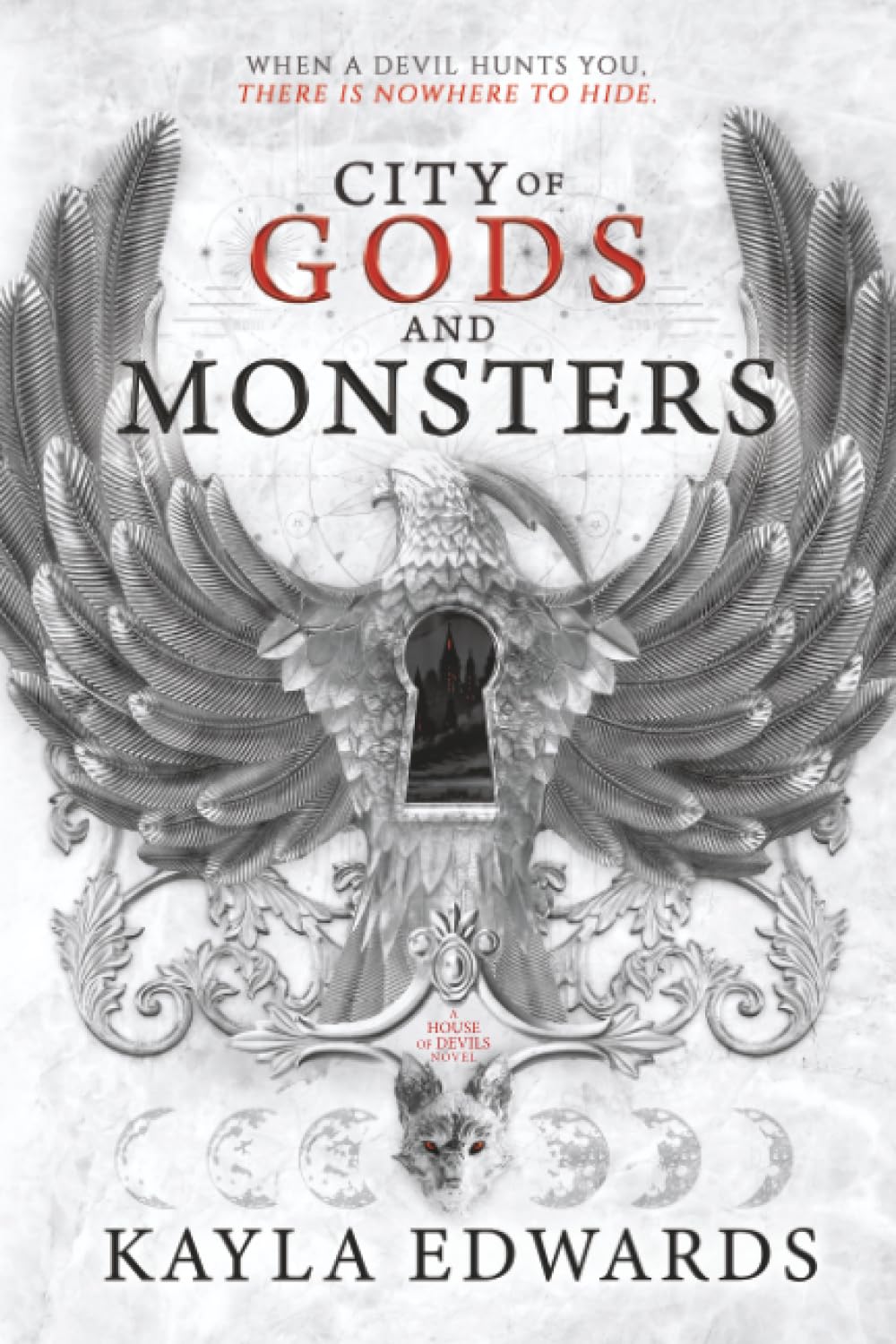
Kayla Edwards
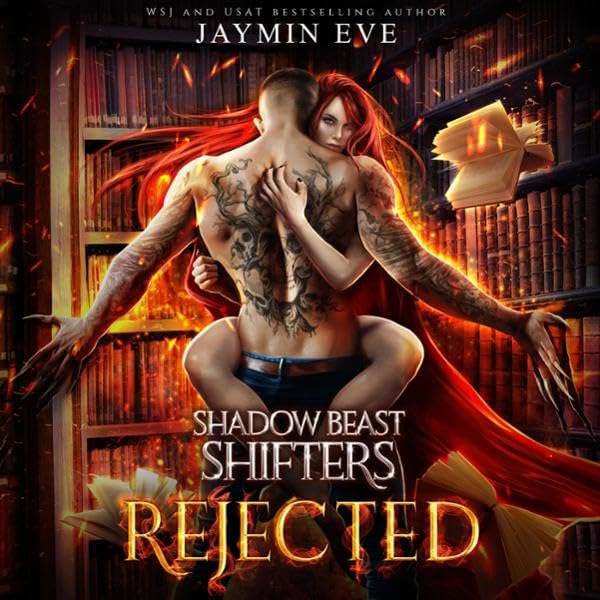
Jaymin Eve