 Find Romantasy Books
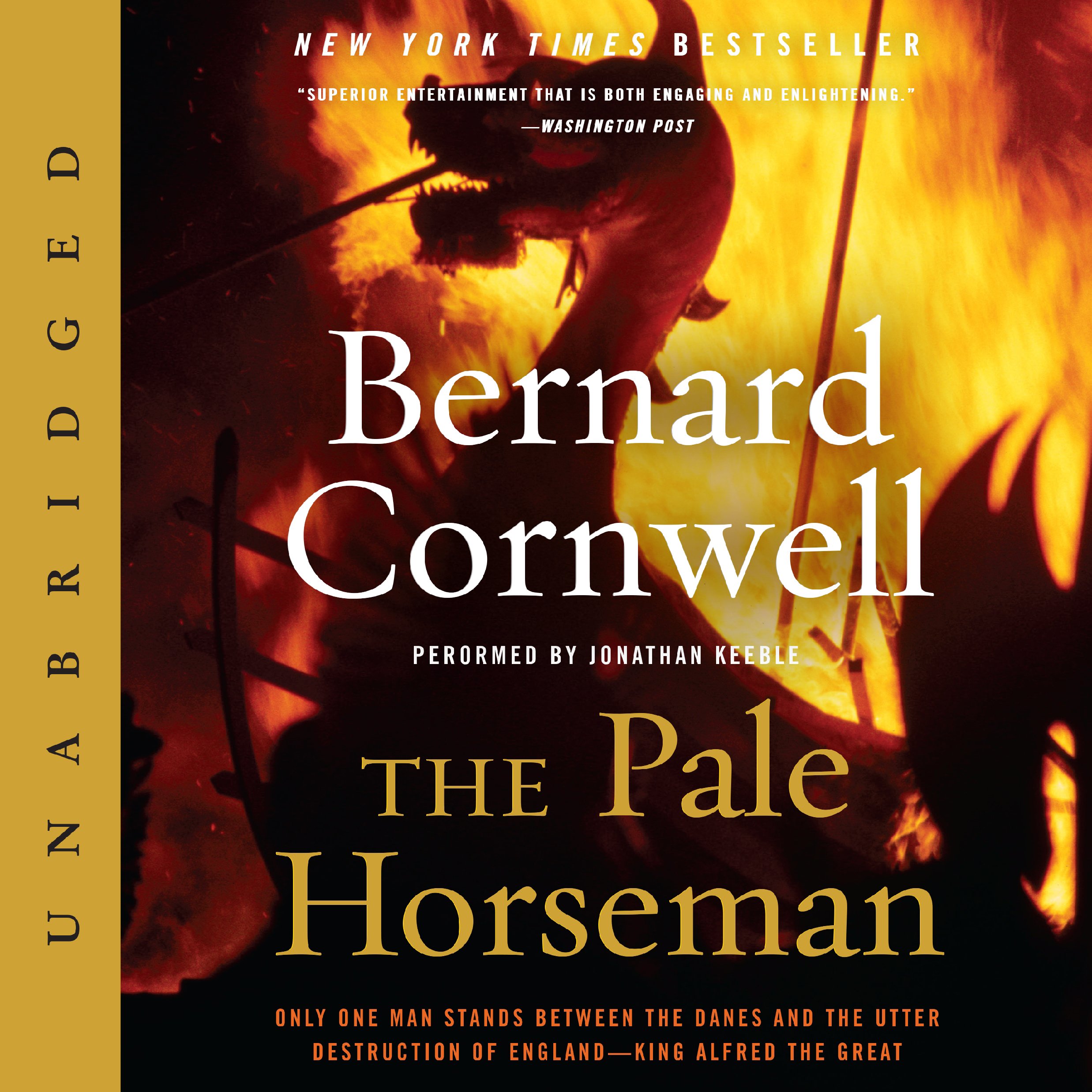
The Pale Horseman: A Novel
Bernard Cornwell
4.6

by Bernard Cornwell
Uhtred of Bebbanburg is a man caught between two identities. Born the son of a Saxon lord, he is captured and raised by the seafaring Danes who pillaged his home, evolving into a fierce warrior who views the world through the eyes of his captors. As the ninth century descends into chaos, the Great Heathen Army systematically dismantles the Saxon kingdoms, leaving only Wessex standing against total annihilation.
Uhtred finds himself an outcast, mistrusted by the Saxons for his upbringing and tethered to the Danes by blood-oaths and loyalty. His path converges with Alfred, the intellectual and devout king of Wessex, whose vision of a unified England hinges on the martial prowess of a man who does not fully belong to his world. Their volatile alliance forms the beating heart of the narrative, forcing Uhtred to navigate a treacherous landscape of shifting loyalties, political intrigue, and brutal warfare.
Driven by a burning desire to reclaim his stolen birthright, Uhtred must decide where his true allegiance lies: with the culture that birthed him or the people who forged him. In this sprawling saga of ambition and survival, the destiny of a nation rests on the edge of a sword.
683HNNGreat Historical Fiction
"I bought this after an Achilles tendon injury forced me to binge endlessly on Netflix - so I spent an interesting day plus watching the "Last Kingdom" series. (A far better day than some of the other binge-watching I did).) I enjoyed the series, but thought there might be something more in the novels on which the series was based. As usual, I liked the novel much more. I've never read any Bernard Cornwell before - apparently I've been living under a rock - but I really enjoyed the adventures of Uhtred. Cornwell's writing is easy to read, the novel is fast-paced and based on historically accurate happenings (credit to him for using the contemporary names for English locations - a nice touch and I thought the evolution of the names was quite interesting). I don't know who doesn't like Viking stories these days (if it's not Vikings, we're all excited about pirates or Tudors - it's a great time to be alive). Uhtred is young (easy to picture as Alexander Dreymon), sometimes he's on the side of Vikings, sometimes he's on the side of King Alfred, but since he's writing his story in retrospect he's appropriately humble about pointing out his errors (many of which allow him to take us to interesting places). It's exciting, about an obscure part in history for those of us in the U.S. (let's face it, most of us can point out the errors in Tudor stories now but this is something new!), and you just want to keep reading. Cornwall has created a dynamic, and viable, character in Uhtred, and Uhtred's somewhat one-sided perspective on his enemies makes for interesting situations. Great read, enjoyable picture of early Great Britain; looking forward to getting the next book in the series. ["
April 28, 2017 Verified Purchase
Stuart W. MirskyDanish Vikings on a Landgrab in England
"This one is a nicely done rendition of the period when the Danes were overrunning England and Alfred, king of the holdout English kingdom of Wessex (land of the West Saxons), stood nearly alone against them. After the other kingdoms, including Northumbria, Mercia, and East Anglia had fallen, there was only Alfred's Wessex and Alfred, a somewhat prissy churchman, seemed the least likely of English kings to hold them off. But he proved a surprise to his contemporaries and, of course, to the Danes. This tale tracks an English lord, an ealdorman, who is snatched from home and hearth at the tender age of ten in the course of a Danish raid on his father's coastal holdings and subsequently reared as a Dane. Coming of age in the warlike culture of the vikings, young Uthred Uthredsson must balance competing loyalties to his adopted Danish father and his English heritage. This first volume in a projected series carries Uthred to King Alfred and his first big decision, and then back again into the jaws of destiny. There is not much of a story here . . . just lots of fighting and running (or sailing) about. But it's all well told and keeps the reader with Uhtred all the way. The book suffers from a certain thinness in characterization though. None of the players are particularly memorable, not even Uhtred, our protagonist. And Bernard Cornwell spends an awful lot of time giving us details of time and place, showing off his extensive research. But he makes it all work. I liked this one much better than I liked the first in his Warlord series, The Winter King (I never read the other two in that series because the first just failed to move me). That earlier one was about the Romano-Celt, Arthur, in his legendary fight to hold back the Saxon tide and defend the Celtic land of Britain. But, of course, as we all know Arthur lost despite his brief moment of glory when he defeated the Saxons in a series of big battles. This one, on the other hand, is about the descendants of those temporarily defeated Saxons, now firmly established in the land they conquered after Arthur, as they struggle to defend themselves against new invaders from their old homeland, their cousins the Danes. Of course, the Danes were among the earliest vikings so this one is basically a viking tale and there's a great deal more historical information to work with in telling it, including the record left behind by the English clerics of the period, the Anglo-Saxon Chronicle, which reports the earliest invasions of Saxon leaders like Hengest and Horsa and takes us right up to later viking times. But if you really like viking tales, as I do, there are lots of others out there, some better than this one. Among my favorites are The Golden Warrior: The Story of Harold and William by Hope Muntz, about the struggles of Harold, the last English king, against William of Normandy for the English throne, and the recently published Saga: A Novel of Medieval Iceland by Jeff Janoda. This one brilliantly retells a fascinating tale found in the Eyrbyggja Saga, one of the most famous of the sagas of old Iceland. Both are powerful novels in the old Norse saga tradition and either one has Cornwell's new entry beat. But The Last Kingdom is a decent read, too, and better than some of Cornwell's other efforts. SWM author of The King of Vinland's Saga ["
October 6, 2005 Verified Purchase
Poisoned BladeEpic Historic Fantasy! (Spoiler Free Review)
"If you're into gritty heroic historic fantasy and have an interest in the Viking Invasions of England, then you'll enjoy this book. Story In the 9th Century, the Danes (Vikings) raid England in search of wealth, bloodshed, and conquest. King Alfred must skillfully negotiate, muster his armies, and win key battles to turn back the ruthless invaders! The story is told from the perspective of a young warrior, Uhtred, who ends up fighting for both sides in the wars. Legendary Viking Invaders, Ragnar, Ivar, and Ubba play key roles in the story. Characters The characters are all deep and well written. They have their own motivations for their actions and their beliefs. The main character is Uhtred, the second oldest son of an English nobleman, who watches cities fall and suffers great triumphs and losses throughout his life. As he grows into manhood, his beliefs are shaped by the Viking warlords and the Christian leaders of England. Writing Style The story is told from Uhtred's point of view as he reflects back upon his youth. He was a young boy when the story begins and this book covers about a decade of his life. He witnesses the destruction of towns, the slaughter of armies, and both cultures first hand. Because Uhtred is a warrior and not a scholar, the writing style is plain, simple, but still manages to be epic and visceral! Action The book is fairly action packed with battle strategies, tactics, politics, and epic battles! You feel the carnage of a shield wall and the terror of sailing through stormy seas in a leaky boat and the thrill of victory. There are fights, duels, skirmishes, and large scale battles with thousands of soldiers. The battles are exciting and the characters suffer consequences as a result. Fantasy This is a historic book based on the Viking Invasions. There's some superstition, but no magic spells, dragons, evil spirits, or goblins. Well, there is one goblin, but he's a dog. When the races and cultures are well defined and the action is exciting, you really don't need fantasy. Maturity: Teen There's some drinking, some war, some womanizing, but no sex or swearing. Overall This is a great book based on the Viking Invasions of the 9th Century. There heroes are memorable, the battles are epic, the story is fast paced, and the plot twists will keep you turning pages. Buy it if you love Vikings. Buy it if you're interested in medieval war. Buy it if you're interested in 9th Century History. Buy it if you love heroic war stories. Avoid it if you need a Poetic Writing Style, like the prose of Robert Jordan. Avoid it if you need dragons, elves, wizards, etc... Avoid it if you are deeply Christian and are offended by Christianity being mocked by the Danes. If you enjoyed this book, read something by David Gemmell! Legend, The Lion of Macedon, Sword in the Storm, Winter Warriors are all great books! You'll also like a fairly new book called Blood Song by Anthony Ryan. It's amazing! ["
February 8, 2014 Verified Purchase
Ian J. MillerWhat detail!
"The story involves the growing up of a young Saxon noble boy called Uhtred, who should inherit his father’s lands, but when as a ten-year-old he accompanies his father to a battle with some invasive Danes, his father is killed. Impressed by Uhtred’s suicidal charge for revenge, Ragnar easily disarms him and brings him up as a young Dane, where he learns how to fight, to man the great ships, and effectively he becomes a Dane. The Danes have come to settle, and to do that, they intend to overpower the Saxon kingdoms, leaving puppet kings paying them tribute. However, Ragnar is killed by another Dane, and Uhtred, losing Ragnar’s protection, must flee. He ends up in Wessex, where Alfred decides he can use him. The story then proceeds to an event that essentially saves Wessex for the time being, then, following some treachery, to a battle that again lets Wessex survive. Regarding history, the major characters, other than Uhtred, were apparently real, the major events were more or less real (one, Ubba, is killed a year earlier than historically to make the story more complete) and the story also gives a genuinely interesting insight into how the Danes of the period lived. I am not in a position to know how genuine that is, but it most certainly gives the impression that Cornwell has deeply researched the period. That may be because he is apparently descended from an Uhtred, although from 200 years later. The character of Uhtred is somewhat overly heroic, possibly because of the personal association, while the characters of the leading known Danes are as well portrayed as could be expected, given that there are historical requirements. The technology and way of life at the time are also well portrayed, although the battle scenes, while exciting to read, tend to be more glamorized. Cornwell tells us that they were horrible, but the actual showing does not quite give that impression, although since Uhtred is telling the story, perhaps we can forgive him for glamorizing his own role. Overall it is a very interesting read, and since it appears to be the start of a series, it encourages the reader to go further. Cornwell does very well to end the book in a way that is almost an ending; my one minor criticism is that it really should have included Alfred’s response to what had happened. Well worth the read. ["
August 30, 2013 Verified Purchase