 Find Romantasy Books

Outlander 4-Copy Boxed Set: Outlander, Dragonfly in Amber, Voyager, Drums of Autumn
Diana Gabaldon
4.8
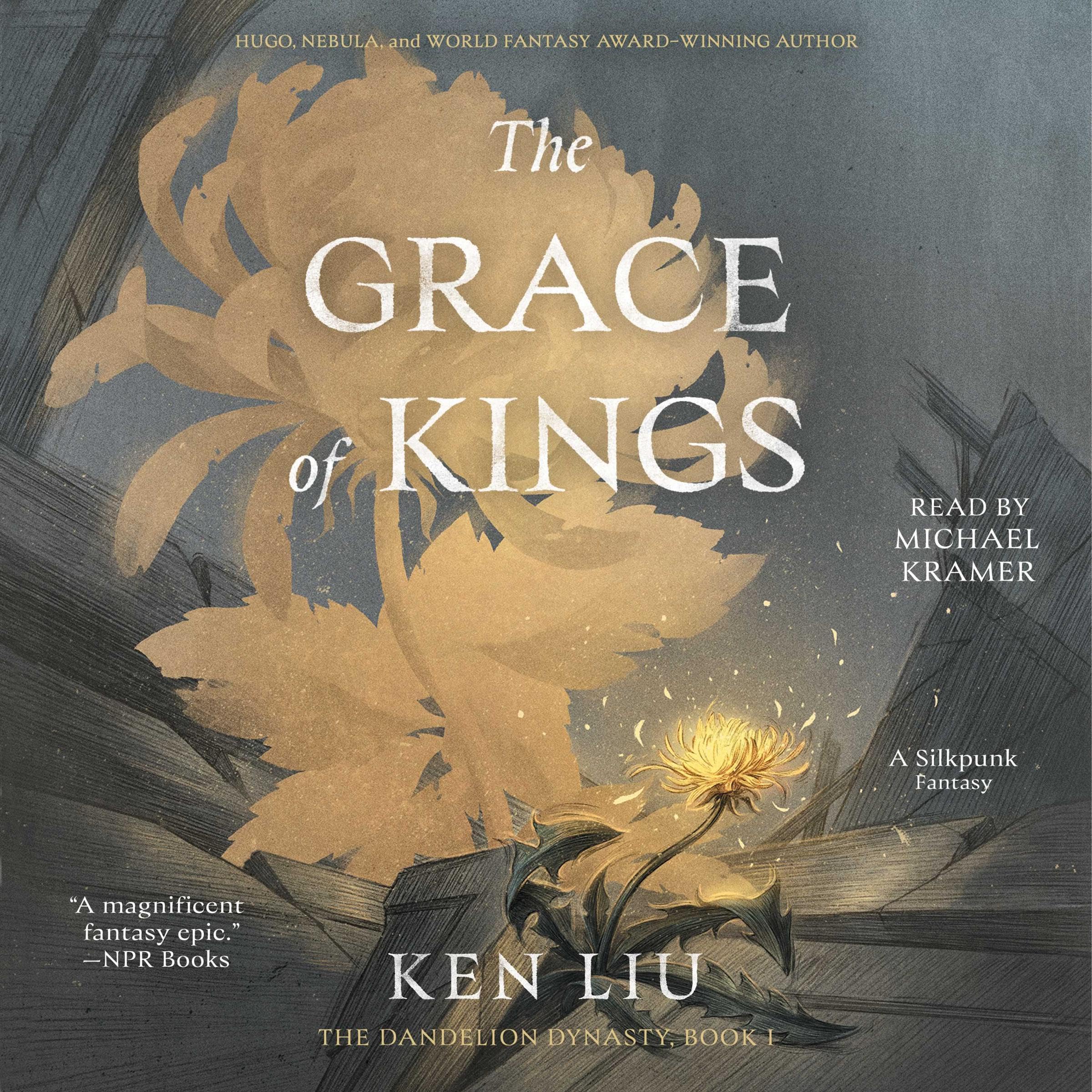
by Ken Liu
In the archipelago of Dara, a tyrannical empire crumbles under the weight of its own ambition. Amidst the chaos, two unlikely allies emerge from the fringes of society: Kuni Garu, a charismatic, quick-witted bandit with a penchant for gambling, and Mata Zyndu, a brooding, formidable warrior and the last scion of a fallen noble house. Bound by a shared hatred for the emperor’s cruelty, they forge an unbreakable bond, navigating a landscape defined by silk-draped airships, mechanical marvels, and the subtle, meddling influence of capricious gods.
Their camaraderie fuels a revolution that reshapes the map of their world, but the peace that follows proves far more dangerous than the war. As the dust settles, Kuni and Mata find themselves at the helm of opposing factions, their deep-seated friendship strained by clashing ideologies. One seeks a future built on pragmatic governance and civic reform, while the other clings to an uncompromising vision of honor and traditional justice.
As their paths diverge, they are forced to choose between the loyalty they owe one another and the destinies they believe they must forge for their people. In this sweeping epic, the cost of greatness is measured in blood, betrayal, and the unraveling of a brotherly bond.
elnitoAn Epic Fantasy that the Fantasy Grouch can endorse.
"I’m not a huge fan of fantasy, but maybe the moniker Fantasy Grouch is a slight exaggeration. I’ll admit that a large portion of my novel-reading diet consists of science fiction but I do occasionally snack on a fantasy novel now and then. Bottom line - I cannot speak with any authority on the merits of The Grace of Kings in comparison to other works of the genre. I am certain there will be plenty of other reviews that will cover this ground. What business does the Fantasy Grouch have reviewing a Han Dynasty inspired fantasy? Ken Liu, ladies and gentleman. Ken Liu. Ever since reading “The Paper Menagerie”, in a 2011 issue of the magazine of Fantasy and Science Fiction, I have watched for his byline and have read everything I could get my hands on. Even when the news came that Mr. Liu’s first novel was going to be an epic fantasy, I was undeterred by this revelation and pre-ordered it on Amazon immediately. I know very little of the Han Dynasty, other than it had it’s fair share of violence, like every other period of human history, it seems. So don’t be surprised with all the battles, court intrigues, failed alliances and betrayed friendships. But it’s not all blood and guts, not by a long shot, even though much of the book is about that inevitable disagreement and clash of ideas that so often requires violence as a means to resolution. The descriptions of the geography and fauna of the islands of Dara are pleasant diversions. Indeed, I found myself occasionally wishing that there was a travel package available. Another aspect of the book I found interesting were the intricate rules governing relations with family and friends, even down to the proper sitting position in a given social interaction. In fact, most of Liu’s characters seem to be pre-occupied with social position and honor. I suspect that this focus mirrors the reality of the historical source material and to a larger extent, East versus West customs in general. The fantasy elements in the book are minimal, which depending on your taste, can be good or bad. Personally, I feel that less is more. But there are fantasy moments, do not worry. There are conjurers of hypnotic smoke, riders of fantastical sea creatures, gods and goddesses, and a magical book that I wish existed and was on my shelf right now. The science fiction fan in me appreciated the assortment of clever mechanical innovations (silk-punk, as Mr Liu has described it in an interview) and the story of my favorite character in the book, Luan Zya. In fact, once I started reading the book, I was reminded of “None Owns the Air”, a short story set years before The Grace of Kings, published in Lightspeed magazine. It explores the early days of the airship technology that is a large part of warfare on Dara. This is not a short book, but in comparison to many fantasy books I see on shelves these days, it is. Occasionally, I had trouble keeping track of a particular character and their place in the narrative, but this is not unusual in a book of this length and nature, and most likely a shortcoming of this reader. There is a map and glossary and a list of major characters, which were helpful. Because the historical inspiration is Asian in origin and my limited knowledge of history is for the most part of the West, I found the culture sufficiently different to think of it in science fictional terms. So, even though this is a fantasy, the self proclaimed Fantasy Grouch was pleased with the book. I’m a fan of film and it is no stretch to imagine this adapted as a series, with the marketing tag “The Chinese Game of Thrones”. Sorry Ken. I had to go there. I would recommend The Grace of Kings to anyone who is interested in a good story. If you are particularly interested in reading a fantasy that has a non-western flavor, then you should definitely pick up this book. And, if you are a fan of Mr. Liu’s previous work, it’s a no brainer. ["
April 7, 2015 Verified Purchase
Happy ReviewerNon-traditional Epic Fantasy
"Emperor Mapidéré conquered all the warring states of the Islands of Dara, thereby imposing “peace” on the known world. But he’s an old man, full of pride. He’s spent years now building monuments to himself, and crazy projects that impose an impossibly heavy burden on his conquered lands. Peace is tenuous. Not everyone has forgotten the conquest, or the independent states that existed before. The book opens with a daring assassination attempt, and widens to show the current situation in the empire, including the introduction of a number of characters who will become very important in coming years—some of them improbably so. According to the author, the book is inspired by the rise of the Han Dynasty, though the setting is not particularly Chinese—it’s an archipelago of islands, occupied by many different groups of people, with touches of magic and meddling but somewhat ineffective gods. This is a very long novel, nearly twice the length of a typical book, and it’s the first of three. That said, it covers more time and more characters at a significantly faster chronological pace than usual. Reviews have likened The Grace of Kings to The Game of Thrones. While there are superficial similarities, I think this is a poor comparison that may lead to unhappy readers. Yes, both are sprawling fantasy epics with large, morally-ambiguous casts, surprise deaths, and wars of conquest. But The Grace of Kings is much more thoughtful, slower paced, and removed from individual passions. As brutal as events on the Islands of Dara are, there is not the same pervasive tone of conscious violence and treachery. People in the Grace of Kings do bad things, no question, but it’s usually because they’re trying to achieve something they think is worthwhile, or they’re overwhelmed by sudden power and don’t know how to cope. By contrast, this means that the Grace of Kings is not quite as immediately gripping as GoT. I found the beginning rather slow. After an exciting first chapter, there are hundreds of pages of setup, essentially, before the various characters come into their own and start acting and having influence. To get technical for a moment, I think this is largely due to the author’s choice to tell the story in an omniscient viewpoint. Most epic fantasy is told from the focused perspective of one individual or another in turns, which leads, at least to me, to a more absorbing, personal reading experience. A better comparison I’ve heard is likening this book to War and Peace. For my part, I was reminded somewhat of James Michener’s historical sagas. While individuals are important, it’s the sweep of history over this region that takes precedence. The writing is itself quite beautiful and enjoyable, as I expected from this award-winning author. This is the first book in a trilogy, but pretty much every conflict and question posed at the start of the book is resolved by the end (while others have been introduced) so it feels satisfying, but like there’s more to come. Recommended, with the caveat to be patient, savor the journey, and don’t look for the same old epic fantasy here. ["
April 7, 2015 Verified Purchase
Nicole SergovNot at All what I was expecting
"I was not sure what to expect going into this book but I am glad I tried it and I am glad I followed through. This was such a complex book of political maneuvering, leadership and battles. The book starts off as a little confusing. The chapters hop to multiple different point of views and it can be hard to grasp what exactly is happening and which characters are to be the main characters. It is not until you get maybe 25% of the way through the book do you get a feel for the direction of the book and the main characters. Since the beginning of the book was a little confusing I was tempted to put the book down, but I am so glad I stuck with it. The beginning of the book shows the emperor of Xana, Mapidere, who is parading throughout the different nations, but there is an attempt on his life. Not everyone is happy with there being an emperor who conquered the other nations. The nation used to be run by multiple Tiro states in which each state had its own king and culture. But the emperor with the Xana army, conquered these states and made a unified nation. The problem is that the emperor is running the nation more like a tyrant and there are still enough people who remember the individualism of the states which becomes a breeding ground for rebellion. This then becomes even worse when the Emperor dies and his son takes over, who is even worse than his father. Rebel groups start to pop up and two key leaders arise from this rebellion; Kuni and Mata. These are two very different characters but they have a common goal in the beginning of their relationship; which is to topple the emperor. Whereas Mata is more of a warrior and brutal, Kuni is more merciful and compassionate. “A lord who knows how to wield men is ten times more fearsome than one who knows only how to wield a sword.” These two key characters become leaders and the dichotomy between the two character’s leadership skills is shown in stark contrast. I honestly enjoyed this book more than I thought I would. It is not a typical fantasy novel and you don’t really get a deep connection with the characters but the lure of the story is with the political maneuvering, the leadership changes/styles and the battles. When I was about 50% of the way through the book, I honestly could not put it down, I was fascinated by it and I read the rest in one sitting. I would recommend giving this book a try if you enjoy more political and strategy books, but it is not going to be your usual fantasy type novel. ["
February 22, 2024 Verified Purchase
Sneaky Burritothere were some things to like, but the story was rather long and dragged in parts
"I finished this book yesterday and as I write this, I'm honestly not sure what I think of it. There were parts I enjoyed quite a lot. Some of my favorite bits related to the POV character, Kuni Garu, and some of his associates. He starts the story as a kid skipping school, evolves into a low-level and good-natured gangster, and then becomes more important, politically. What I like about him is that he is funny and clever. He knows that he is not a fighter, but he is a good leader, and administrator, and he listens to the advice of those around him. He has weaknesses, and he can be afraid. He is a very human character, relatable and sympathetic. Similarly, the women in his life are complex and interesting and also uniquely talented, and I get every sense that he appreciates them for who they are. Although I got a bit weary of the constant battles and trading of territory back and forth during the wars described in this book (I honestly can't remember which state was which), I liked the battles where Kuni's side had to be resourceful, had to come up with new and unusual strategies, to win. Yes, some of their technological innovations are questionable for the time period involved (submarines?) but then, this is fantasy, as evidenced by the facts that gods show up repeatedly throughout the story. The writing style was just OK for me. There was a lot of exposition and description and this kind of bogged the story down in my eyes. There was a long stretch during the middle of the book, where so many battles were fought, that I thought about putting the book down. I just found myself not caring which state/principality/kingdom went over to which side. I feel like some of this could have been cut, making the story shorter without sacrificing the points the author wanted to make. (I have read some of Ken Liu's short stories and they just don't have the same feel.) Pacing is a little odd/uneven. We are first introduced to another POV character, Mata Zyndu, when he is a baby, and then we leave his storyline (mostly) for a very long time. Plus, Kuni's Marshal, Gin, is not introduced until the last 25-30% of the book (I think), and yet she plays a key role in many decisive victories. But because of when she shows up for the first time, she is like an afterthought. We are treated to some earlier scenes in her life, where she learned lessons in strategy, fighting, etc. (not always conventional lessons, but we are told she takes information away from these encounters), and if those had been sprinkled throughout the book, perhaps in the context of the fighting (as in, what was going on in the world around her while she was gaining experience), it would have been a better way to integrate her into the story. Regarding the gods, I don't really feel like they added much. Most of their scenes are just gods conversing among themselves. I feel like these scenes could've been left out, entirely, and the story wouldn't have changed significantly. Those few actions attributed to beings we assume are gods during interactions with the mortals could easily be handled in another way. I am not familiar with much regarding Chinese history or literature, so if there is homage here (it certainly *feels* so), I am not going to recognize it. I do sometimes wonder if paying tribute to what has come before affects the structure of the story so much, and that if a more historical, Eastern style of storytelling is just not as appealing to me, as a modern, Western reader, as it might be to someone more familiar with the source material. This book gets some complaints about the female characters but that is not something that bothered me (and I am a woman). Because this is situated in a world modeled after a specific historical period (or so I assume), societal roles for men and women are imposed externally, and people mostly move up to them. Some characters break that mold. Some characters make fatal mistakes by assuming that other people will live up to their gender roles. It doesn't break immersion for a single female character to take on a role of, say, military leadership. But if all the female characters start leading, it no longer feels like it is taking place in a setting similar to historical China. I actually do think the author broke the mold as much as he could here. Anyway, I enjoyed Kuni's exploits and since he was the main focus of the book, I'm inclined to give at least a few stars. I just didn't care for the writing style or the inclusion of the gods. I'm not sure when or if I'll be picking up book two, either. I really can't decide if I want to continue. ["
July 21, 2017 Verified Purchase
Diana Gabaldon
V. E. Schwab
Diana Gabaldon
Natsu Hyuuga

Natsu Hyuuga
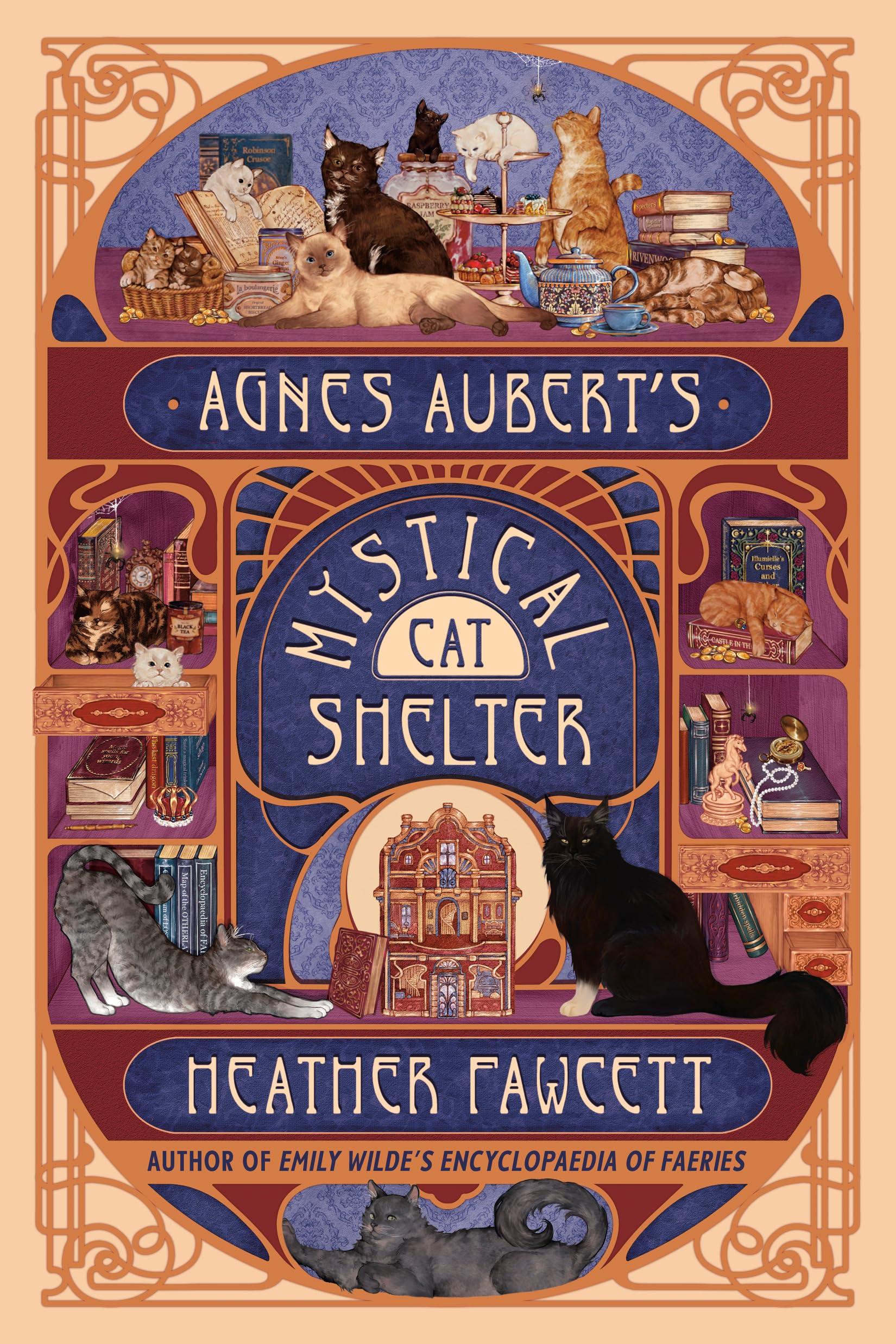
Heather Fawcett