 Find Romantasy Books
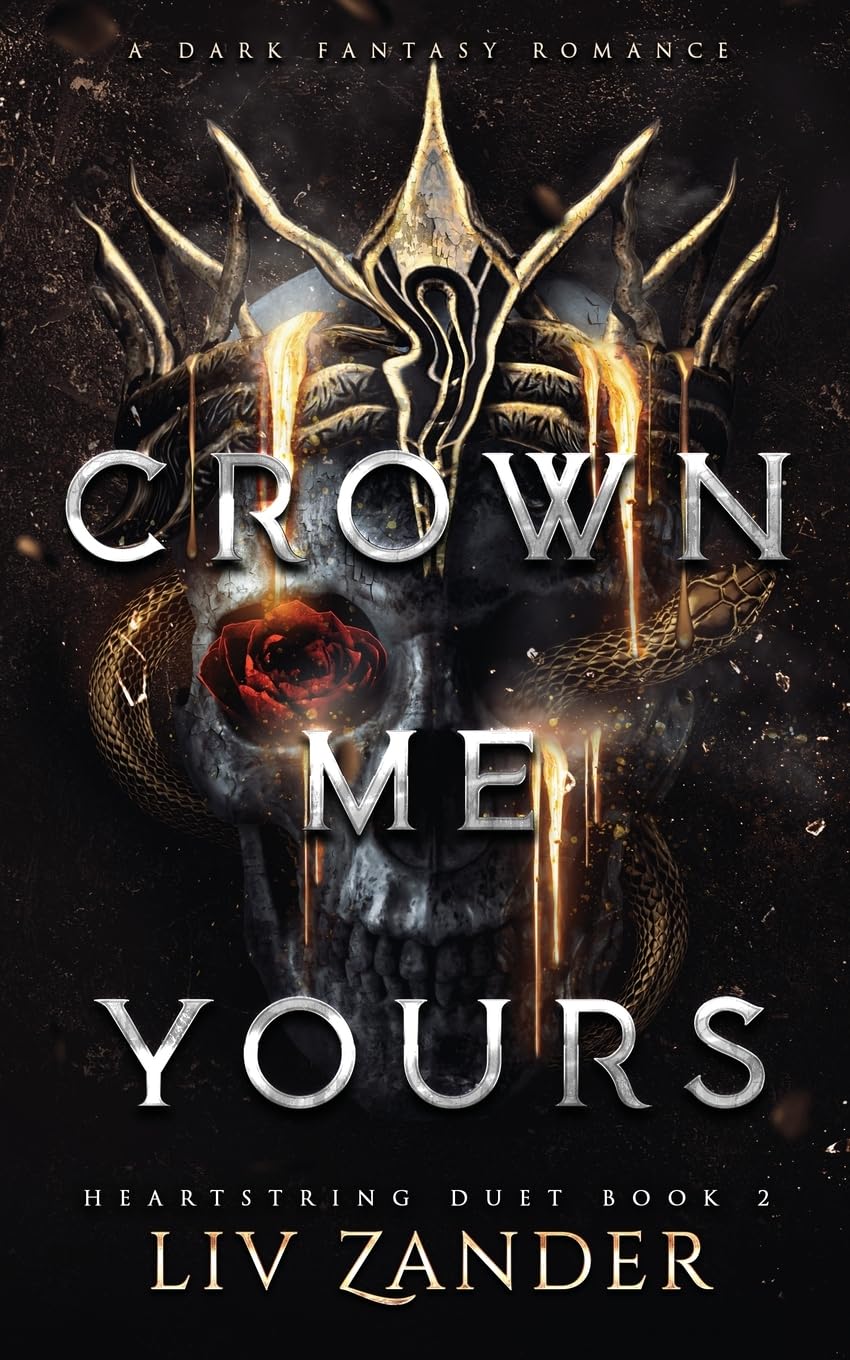
Crown Me Yours: A Dark Fantasy Romance (Heartstring Duet)
Liv Zander
4.7

by Tamsyn Muir
Harrowhark Nonagesimus, the last necromancer of the Ninth House, has ascended to the rank of Lyctor, but the victory she craved has left her world in ruins. Now bound to the service of the Undying King, she finds herself aboard the Mithraeum, a decaying space station haunted by the weight of ancient secrets and celestial horrors. Tasked with fighting an unwinnable war, Harrow must master her newfound, god-like powers under the tutelage of three enigmatic and hostile peers.
Her physical health is failing, her memories are fracturing, and her mind is a labyrinth of dangerous inconsistencies. Haunted by the vengeful ghost of a dead planet and forced to work alongside a detested, infuriating rival, Harrow struggles to maintain her sanity while unraveling a conspiracy that threatens the remains of the galaxy. As the lines between reality and nightmare blur, she is forced to confront a devastating possibility: someone is actively trying to destroy her from within the emperor’s inner circle.
In a narrative defined by Gothic atmosphere and high-stakes necromantic intrigue, Harrow must decide if her survival is worth the price of her own soul, or if the universe is better off without her.
Josh MautheNot as "fun" as GIDEON, but more complex, stranger, ambitious - and just as good
"I absolutely loved Gideon the Ninth, Tamsyn Muir’s “lesbian necromancers in a gothic mansion in space” story told from the perspective of a jock whose interest in the plot around her couldn’t have been less, and whose main concern was fitting with the cute women around her. Gideon had a wild story, one that involved an ancient puzzle, some horrifying uses of necromancy (lots of bones involves), a bit of an Agatha Christie murder mystery, and a climax that tied together a lot of the emotional beats that lays so quietly and subtly under the story. Now comes Harrow the Ninth, the second entry in a planned trilogy, which switches narration from the jock warrior Gideon to the young, crafty necromancer Harrow, who’s still reeling from the events of Gideon, and finds herself in a whole new hostile environment and trying to figure out her place in a whole new hierarchy. What unfolds from there gets…well, it gets complicated. Very, very complicated. And that’s without mentioning the alternating chapters that find Harrow remembering the story of Gideon the Ninth…except that Gideon’s not there, the characters aren’t quite the same, and the plot keeps diverging from our memories. Harrow the Ninth is undeniably dense and complicated, even without the weird questions of memory that those chapters bring up; add to that the shift from Gideon’s careless, simple narration to Harrow’s careful, secretive perspective, and you have a book that feels exponentially more challenging than the original. That goes for the plot as well; while Gideon had the hook of this strange gothic murder mystery, Harrow has all the scheming of Game of Thrones as people jockey for the favor of God (whose name might be John?), prepare for an apocalyptic threat, and bully Harrow and another newcomer into showing the powers that they need to display very quickly - oh, and no one (and I mean no one) is being honest about their motivations or even their actions. All of that can make Harrow the Ninth a bit less “fun” to read than Gideon, but it doesn’t make it any less enjoyable, stunningly imaginative, richly characterized, or compelling and gripping. If nothing else, Harrow kicks off the mystery early with this alternate version of the events of Gideon, but it won’t take long until you’re just as immersed into this weird relationship with God, the people around him, or the story of the one man who keeps trying to murder her in increasingly horrifying ways. Muir’s imagination is allowed even more free reign in Harrow than in Gideon; while the first book allowed us to see a truly wild version of necromancy and horrifying magic, Harrow takes it even further, creating spectral horrors, alternate dimensions of death, magic of wholly unexpected schools, and a whole lot of violence, all while developing her universe far beyond the limits of Gideon’s limited interest. In some ways, Harrow definitely feels like the middle book of a trilogy; while it’s entirely self-contained, you can definitely feel the threads being placed for what’s to come, and the end of the book sets up a third book that should just be a delight. But that doesn’t detract from any of the pleasures of Harrow the Ninth, whose writing is so good that the simple shift from second-person to first-person made me sit up straighter and gasp a little bit. Gideon is a blast, but Harrow might just be better for its complexity and ambition, and it’s all the better because Muir more or less nails it, taking on some astonishing difficulty curves and sticking the landing perfectly. What a joy this book is; here’s hoping that book three comes soon. ["
December 20, 2020 Verified Purchase
FrankNot as good as the 1st, but still great.
"Harrow was probably my least favorite character in Gideon the Ninth. So, I worried about a book solely based on a character who mostly acted like the foil for Gideon, but once wrapped my head around what the book was I liked it quite a bit. First the parts that might bug people. The books feel wildly different. The first book was basically a murder mystery book with space wizards. This book is a mystery, but more like Memento. A good story is made up of a main character who needs to go through some sort of personal transformation. The journey there is just how they navigate and address the things that help or hinder them. So, most of the world around the main character is more 2 dimensional. Like Memento you are drip fed things in portions of portions, but in Memento the main character is actively playing a part because he's trying to get to a known goal and the memory loss itself is a supporting character of sorts that he has to address. In doing so he goes through that transformation. Harrow is the exact opposite. She basically already went through the transformational journey, and spends most of the book being passively pulled back to that state with bits of the plan she already made being explained in the moment they are needed. What's even weirder is that it's not like her transformation comes through struggle. It's more like a child who is a blank slate growing into their personality, but one that is already predetermined. Needless to say, the book can feel very disjointed and like a novella that got stretched into a novel. As negative as that all sounds, by the end I appreciated this book. Any negative reactions I had were more from just how off the book feels after the first. It's like going to see a movie expecting a comedy and it turns out to be a good drama. Even though the movie was good you can feel a little disconcerted. This book ends up being a lot like the Silmarillion to the hobbit, or chronicles of Riddick to pitch black. The first story is very character driven in a much more isolated world, and then the sequel, or other book, spends the majority of the time expanding the universe instead of capitalizing on the existing characters. There really just isn't a sequel to Gideon the Ninth without expanding the universe. The world was too small for the characters to really grow. So this book is about world building and I felt that was done really well. The universe feels very unique and interesting, and opens up a lot of opportunity for what the 3rd book can be. I would guess that there was a bit of a kill your darlings situation with the first book where the extended universe was drastically cut to get to the meat of the story, and this was a book to get all that out. I'll also note that the story of Harrow is still good even if it is dragged out. The last 1/3 of the book is much better in this regard. So, I think the secret to enjoying this book is to understand that it is really two things put together. A really cool world building effort with a character story that's dragged out through the first 2/3rds and then really committed to in the end. I liked it by the end, but I would be disappointed if it doesn't get back to something more character driven in the 3rd. Also, I think this would have worked better as a couple of novellas. ["
November 19, 2021 Verified Purchase
CassieComplex, Original, Amazing
"I did not know it was possible to love the Locked Tomb series any more than I already did after Gideon the Ninth, but here we are! This book does a fantastic job of making you think you possibly had a stroke while reading the 1st one. We have flashbacks that are not any where close to the 1st book, characters are mysteriously missing, and Harrow's memory is completely shot. But then we find out we have the world's #1 most unreliable narrator in Harrow! And the pieces all fall into place, what happened and what is happening. I will warn that the book can be confusing due to this and we jump around timelines a bit but just keep reading - it will all make sense. This book of course does not have the same tone as the first, but that was expected for me - Gideon and Harrow could not be more different. This book really solidifies our knowledge about the Emperor, what the Lyctor's actually do for him, and what/who Blood of Eden is/are. The additional story at the end "As Yet Unsent" really helped fill in missing pieces about BoE as well. I am so excited to read Nona and see where this story goes. The plot is utterly massive (love it, obsessed) and all the characters are well fleshed out (even the baddies). I am obsessed with this world, I love it. It's so original, I've never read a series like this before. I will definitely be re-reading and then will be massively depressed until the 4th book is released! ["
March 10, 2026 Verified Purchase
JmaynardPlods for too long, but goes out with fireworks
"More than halfway through Harrow and I was ready to give the book three stars. Harrow follows directly from where Gideon ended, but is written very differently. Most of the book takes place on a space station, the Seat of the Emperor. There are only six people there: The Emperor, Harrow, Ianthe, and the Emperor’s three remaining Lyctors, Mercymorn, Augustine and Ortus. However, there is something wrong with Harrow; making her an “unreliable” narrator who is blindly following instructions she has left for herself, written in her own hand. I’m not the biggest fan of narration by possibly insane characters, but it was an even bigger struggle here because Muir chose write nearly all the book in second person point of view. I completely understand why she chose to do so – the style suits the story being told. I still hate it. It’s an awkward POV and makes it easy to forget who the events are happening to. The waters are muddied further by the fact that some alternating chapters go back to the events of the first book, but those events are now different. I figured out quickly what was happening, so it felt like a lot of time – too much time – was spent unnecessarily “rewriting” history until the big reveal of why Harrow came to be like she is. The plot did not advance for far too long. Nevertheless, I read the book almost straight through because of the worldbuilding. Readers get a bit about the Great Resurrection through which the Emperor saved humanity, much more information about the planet revenants that are hunting the Emperor and a whole lot on necromancy. I enjoyed how Muir’s necromancy is treated more like a science, with expertise in various disciplines (bone magic, flesh magic, spirit, etc.) I like the new Lyctors. And frankly, I absolutely loved the Emperor Undying/God. He is fascinating and his interactions with Harrow and the rest of the characters are the highlight of the book. The book jumped from three stars to five solely because of the last third (and that scene with the soup, omg!). When Muir begins to tie all the threads together, when the plot against the Emperor is revealed, when we see what Harrow set in motion, who is in the Locked Tomb – I could not put the book down. The conclusion, while something of a cliffhanger, was excellent. I still feel too much time was spend on Harrow’s “madness”, but the story toward the end fulfilled the potential of book one so that I cannot wait for the finale, and more John. ["
August 16, 2020 Verified Purchase
Liv Zander

Rachel Gillig
Rachel Gillig
Keri Lake
RuNyx
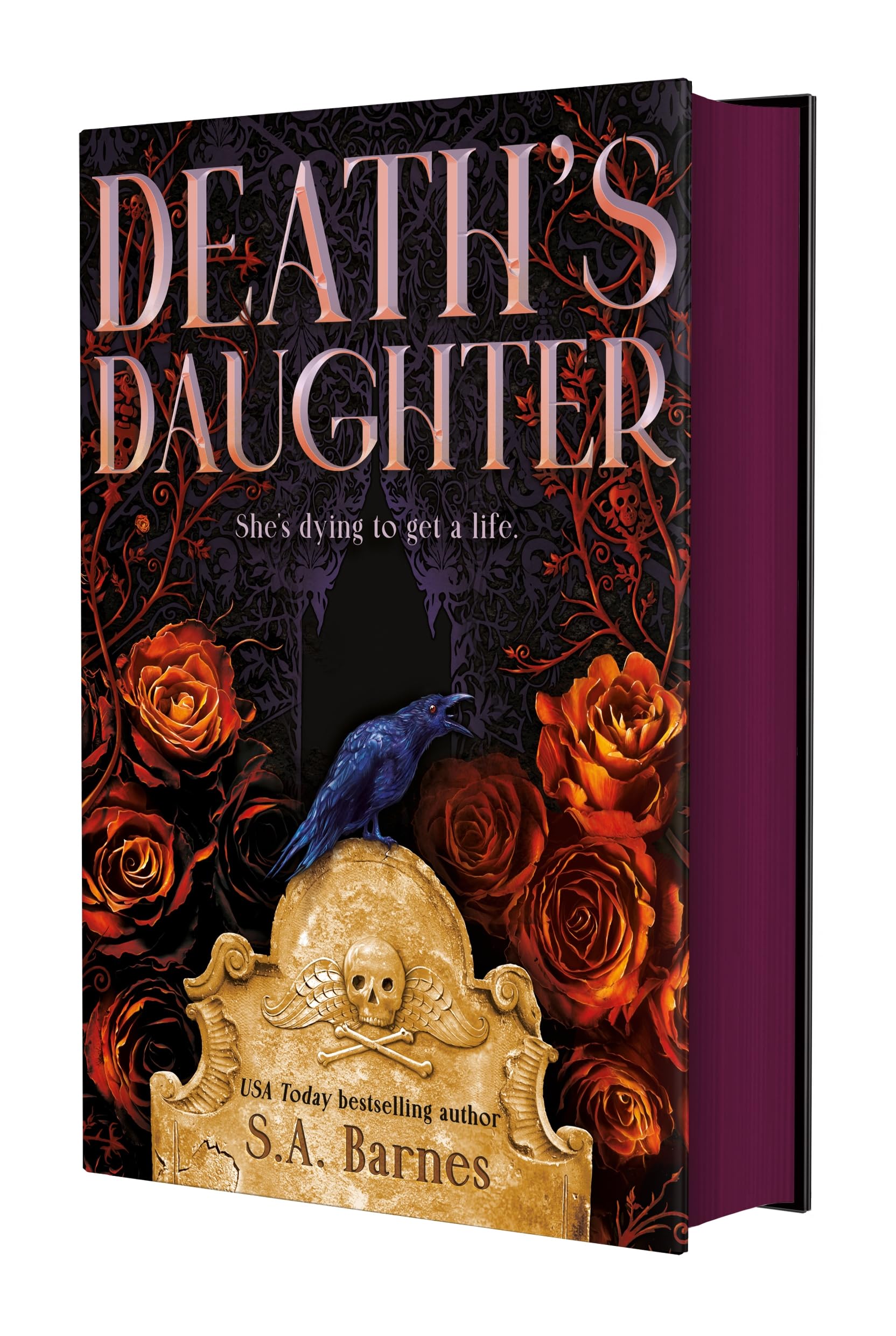
S.A. Barnes
