 Find Romantasy Books
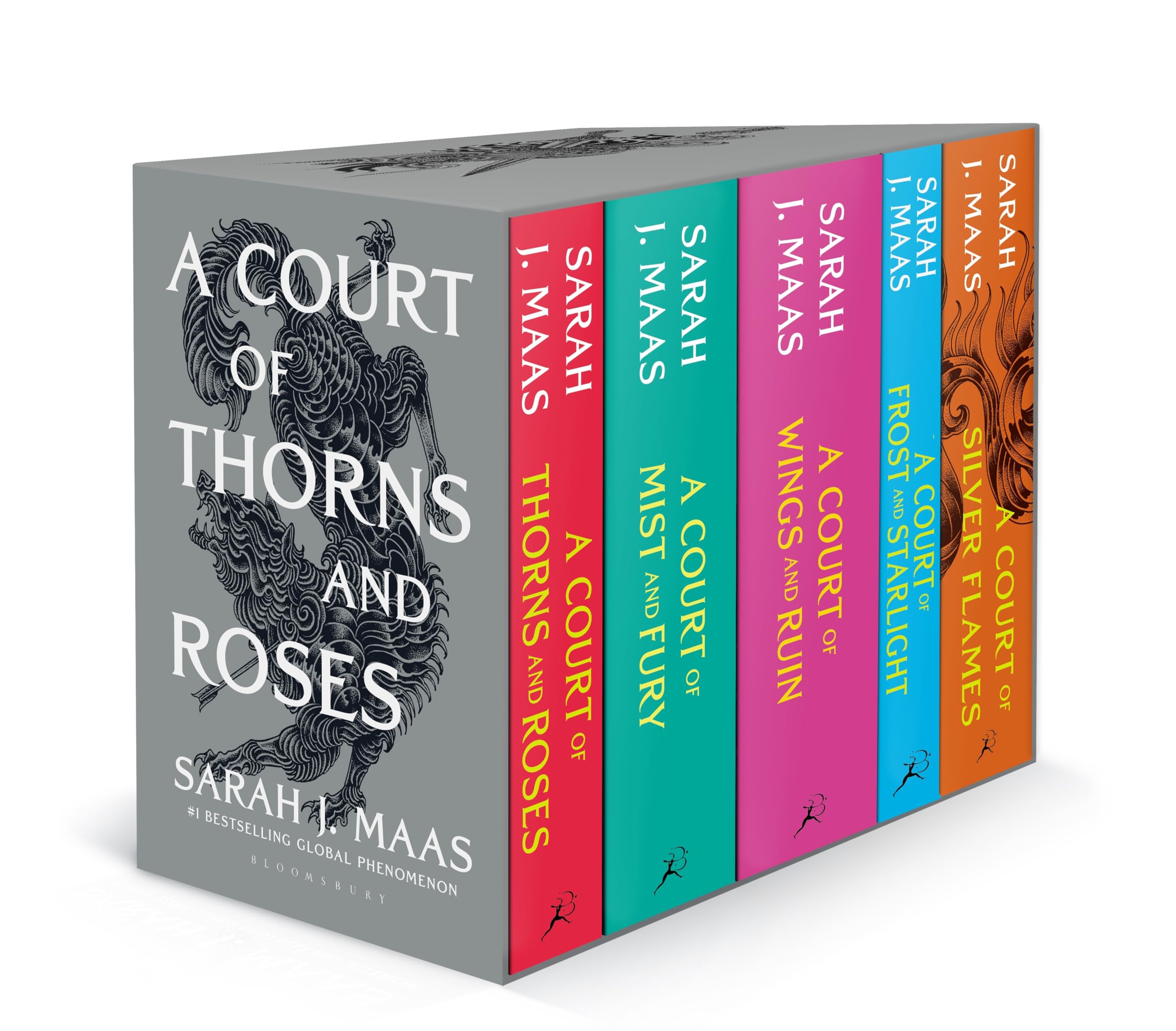
A Court of Thorns and Roses Paperback Box Set (5 books)
Sarah J. Maas
4.8
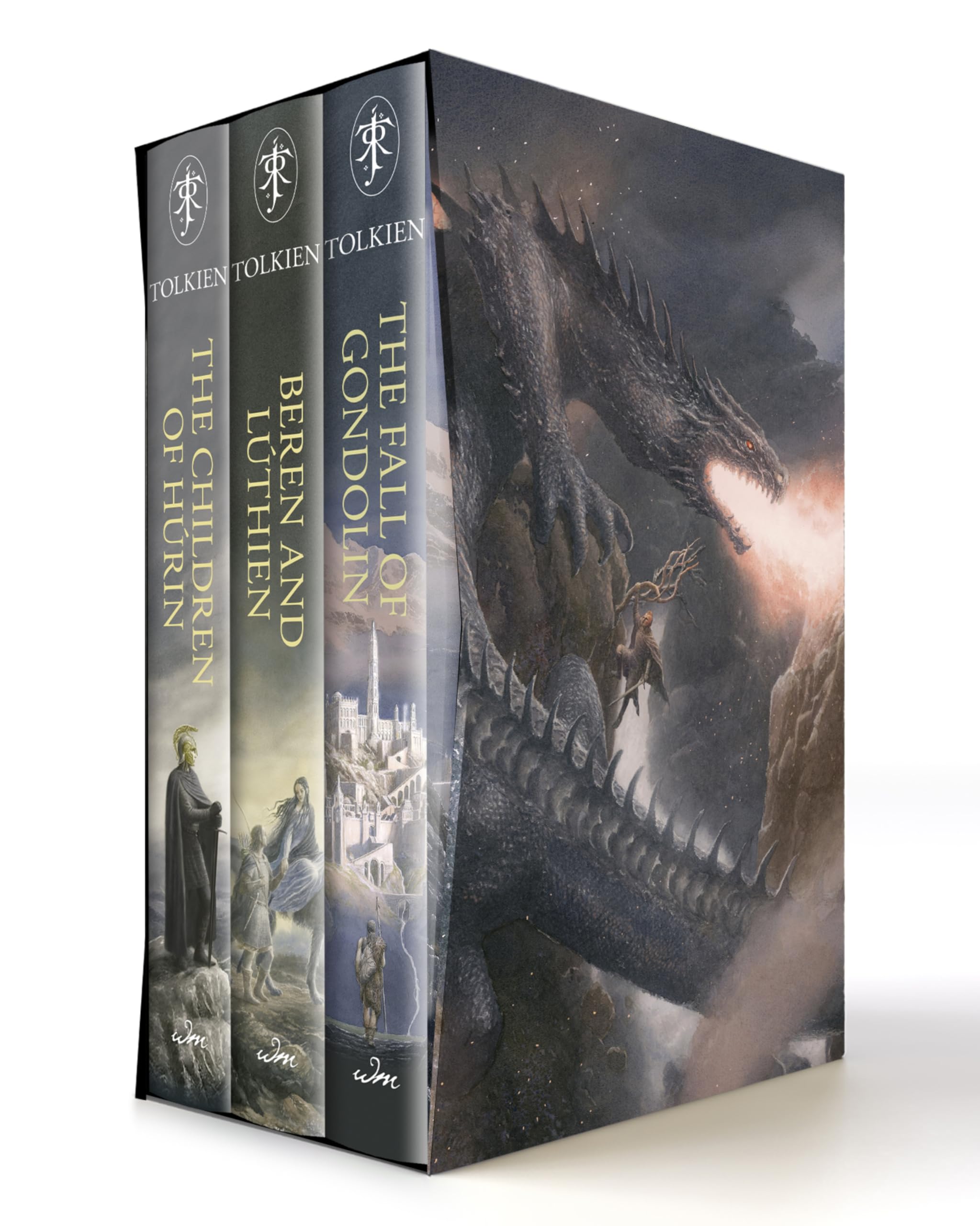
by J. R. R. Tolkien
Long before the quest for the One Ring, the First Age of Middle-earth unfolds as a tapestry of tragic heroism and forbidden devotion. This collection gathers three foundational legends, each defined by the shadow of the Dark Lord Morgoth and the indomitable spirit of those who defy him. In *The Children of Húrin*, the warrior Túrin fights a desperate, doomed battle against a malignant curse that threatens to destroy everything he holds dear.
The stakes shift toward the transcendent in *Beren and Lúthien*, which chronicles the quintessential romance between a mortal man and an immortal elf. Their love serves as the ultimate act of rebellion, forcing them to brave impossible odds and infiltrate the fortress of evil itself to reclaim a lost treasure. Finally, *The Fall of Gondolin* tracks the rise of the hidden Elven city and the pivotal union of the human hero Tuor and the princess Idril.
As treachery threatens the last refuge of the light, their survival becomes the final hope for the future of the world. Through these interconnected epics, Tolkien explores the harrowing intersection of fate, sacrifice, and the enduring power of love amidst the wreckage of a war-torn age.
CJDsCurrentReadA great boxset for The Great Tales
"This is a solid collection for the great tales. The boxset is of a good quality and the dust jackets have a nice shine to them. The artwork by Alan Lee is absolutely gorgeous. If you’re looking for a new set and haven’t read these, this is the one! My review for The Children of Húrin: This is one or part of Tolkien’s ‘great tales’, and it is apparently one of the earlier things he worked on, continuously altered, and made further notes on, until his death. The editing work from his son included completing the work and making it a cohesive linear story for readers, and was published in 2007. This is also a part of the Unfinished Tales and The Silmarillion. I had intended to read through some more of Tolkien’s work prior to September, and the release of The Rings of Power. When I realized it was already august, I knew I had to get it in gear. Now the great tales aren’t the storyline from tRoP, but I still wanted to conquer them as I have already read the appendices before. Due to time, I decided to go with the audio, which sadly means I missed the great illustrations on this first read through, but it is narrated by the late Christopher Lee…his performance is explosive. However it was a bit weird, because the audio is broken into 7 chapters for an 18 chapter book, with seemingly no reason whatsoever for it. Tolkien called this The Lay of the Children of Húrin, a lay being a narrative poem (typically sung). In many ways it also comes off as very epic, both in the style of poem, and the things happening. I really found myself thinking about this quote from Tolkien’s son (about Jackson’s LotR trilogy): “They eviscerated the book by making it an action movie for young people aged 15 to 25.” And although film cannot mimic the lyrical and powerful nature of Tolkien’s ability to write, this story includes some heavy things, descriptions, and themes that would almost read more as George R. R. Martin. It’s for that reason I kept thinking of the quote. Tolkien writes of dismemberment, torture, orcs beheading huge groups of people, humans hanging large groups of orcs from trees, suicide, unwitting incest. I mean there’s a lot to digest, but a lot of these things kind of resonated with me as the kind of violence translated into Jackson’s films. Regardless of that, or with that being said, Tolkien still gives us the history, or almost overview of the story. The description is light, not exactly glossing over things, but he does not dwell on action and terror stroke by stroke. A huge battle is simply talked about as having happened, you’re never really inside the moment. It’s for that reason that Tolkien always translates into history for me. This is much more linear than the Silmarillion as a whole, but they can still be viewed as almost textbook like writing. None of this is meant as a negative in any way though, as I absolutely love Tolkien and I absolutely loved this story. My review for Beren and Lúthien: This one opens with a preface by Christopher, at the age of 93, that I found truly astounding. It kind of continues throughout the book, as the tale is rather short, and has several versions. I think that Tolkien fans are really fortunate that he felt himself to be a protector/scholar of his father’s work, rather than living in its shadow, because he’s the only reason a lot of these things saw the light of day. In this preface he spoke to how his father would often change things, or names, or themes, and how an addition of a single character or thing could influence him rewriting something entirely. I loved how Christopher spoke to how he did not take these versions of the great tales to be canon, or to uncanonize other versions, he was just striving to give fans the most linear, narrative story possible. Beren and Lúthien, or The Tale of Tinúviel (as the story and chapter are entitled—from The Book of Lost Tales Two), is an extracted version of their love and stealing of a Silmaril from Melkor/Morgoth. I personally kind of found this edited version to erase Beren, in the sense that it did not really include any background on him and his heroics. Lúthien runs from her father and even frees Beren, which is in no way an issue for me, but I think it weighs even heavier when you include who he was. Aka he felt a little useless to me. Luckily however, this is a rather short extraction. (And that’s not at all to say that I actually found it to be bad! At all!!). The remainder of the book continues on with additional context from Christopher throughout, as well as additional excerpts from various versions and histories that he’s chosen to highlight for this combined edition of the great tale. These excerpts are from the actual lay, and therefore are genuine poetry in rhyme. That’s never been my cup of tea, but you can tell the lyrical prowess that Tolkien had, and the audio most definitely flowed effortlessly. I once again for my first read through miss out on all the illustrations, but we are hightailing it for The Rings of Power prep. I of course would be remiss if I did not include the fact that it’s said the story originated from Tolkien taking woodland walks with his wife-to-be Edith, and that he found himself to be the mortal in the presence of greatness, a beauty of the Eldar. That is why Beren and Lúthien are inscribed on their tombstones, and I can only imagine the story was continually rewrote as their love grew and changed, and Tolkien wove it into the fabric of middle-earth. My review for The Fall of Gondolin: The final book edited by Tolkien’s son, and the final of the great tales. Again, I’ll express my great respect for all of the scholarly work Christopher did with his father’s work. This one followed the same format as Beren and Lúthien, with there being a preface as well as additional notes from Christopher throughout, as well as the actual content from Tolkien. I again did the audio, which was done very well by Timothy and Samuel West—with one of them reading for Christopher, and the other for Tolkien. Sadly, missed out on the illustrations again though. This one was again a rather short narrative tale that Christopher put together. It was roughly an hour and 45 minutes out of an 8:18 audiobook. For me that just goes to show the historical or textbook style writing that Tolkien had employed with these, not to mention he never finished entirely anyway. That’s not to say they aren’t poetic, or lyrical, it’s just that it was giving the information in a textbook/history way, it gives important events and major characters, without deeper detail. That’s again not to say I did not enjoy, I love the way the stories are told, it was just short! The only thing I dislike about this formatting choice is that it once again takes away from the linear tale itself. Whereas The Children of Húrin was for the most part the entire book, Beren and Lúthien and The Fall of Gondolin are only a piece of the full book. It is true that Húrin has the most pieces anyway though. The Fall of Gondolin is a pretty dark tale of the might of Melko(r)/Morgoth, with balrogs, dragons, orcs, and men. He orchestrated the deaths of several named characters, as well as the overall downfall of the kingdom. I would love to see something done with this one day. A big thing I’d love to talk about with this book is that the fall of Gondolin features a Legolas Greenleaf! And seemingly not the fellowships Legolas, who was born in the second age?! It has been remarked that if Tolkien continued his work he would more than likely have changed this name entirely, as elf names were not typically reused. Another thing Christopher touched on that I really liked and wanted to highlight was that Tolkien considered TLotR to be one story, but in a referenced letter he had stated that he was fine with ANY of it being published for people to read, even calling it “this stuff.” So I am sorry Tolkien purists (I myself am kind of at least halfway in this camp…), but he was ultimately the approver of the trilogy it seems. ["
September 9, 2022 Verified Purchase
C. WhiteWonderful set & great value
"EXCELLENT SELLER; came in good condition, fast shipping. Wonderful collection & a great value ["
November 8, 2025 Verified Purchase
Sarah J. Maas
Sarah J. Maas
Sarah A. Parker
Alex Aster
Devney Perry
Sarah J. Maas