 Find Romantasy Books

A Court of Thorns and Roses
Sarah J. Maas
4.6
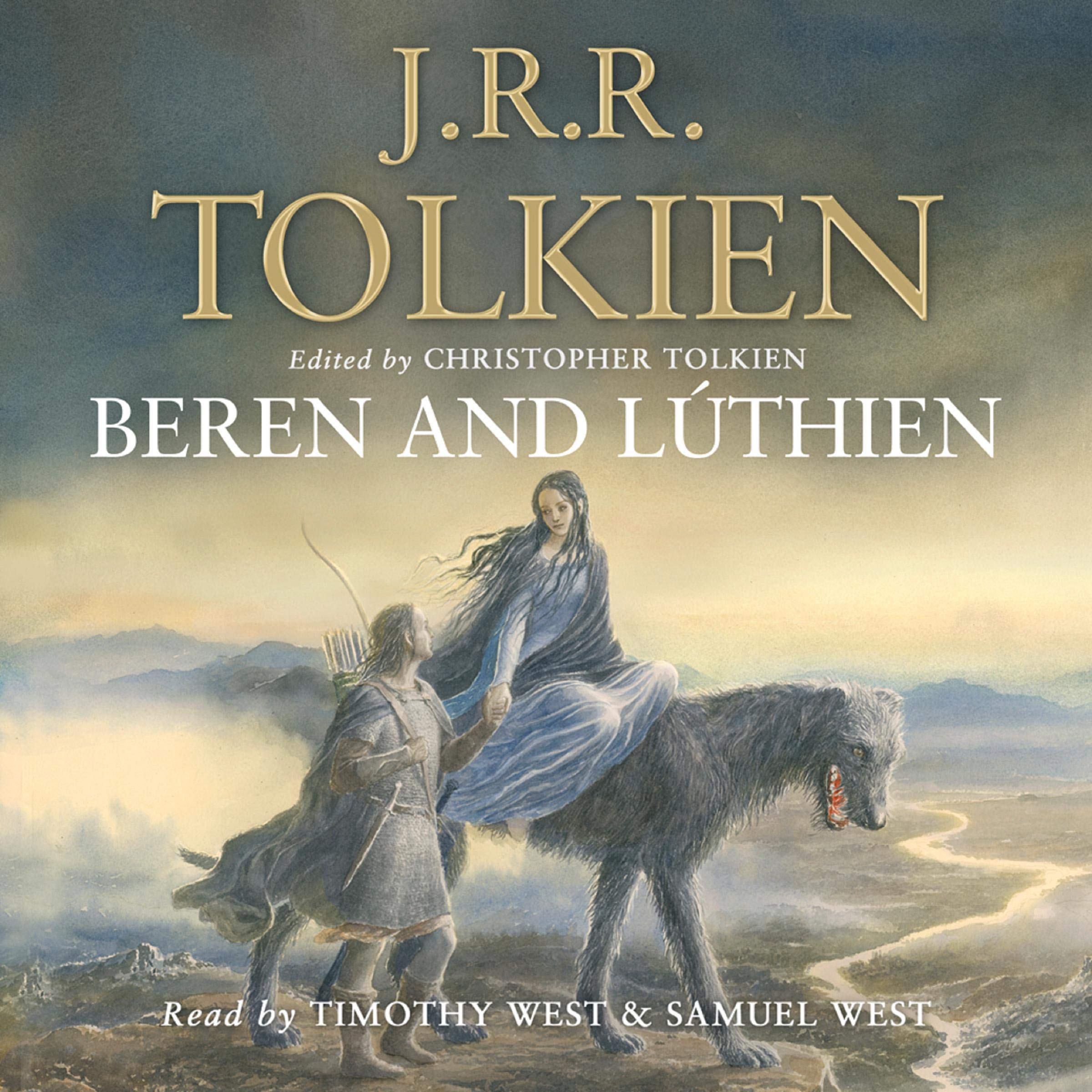
by Christopher Tolkien
Beren, a weary mortal man forced into exile, and Lúthien, an immortal Elven princess of unparalleled beauty, find their fates irrevocably intertwined in a world shadowed by the growing darkness of the First Age. Defying the rigid boundaries between their races, the two embark on a forbidden romance that challenges the authority of the Elven court and the wrath of the gods. When Lúthien’s father, King Thingol, demands an impossible price for her hand—a Silmaril, one of the three holy jewels stolen by the arch-villain Morgoth—Beren accepts the suicidal quest.
What follows is an epic journey that traverses the treacherous landscape of Middle-earth, pitting a desperate pair against the greatest evil the world has ever known. Their bond is tested by overwhelming odds, divine interference, and the haunting reality of their disparate lifespans. This foundational myth explores the profound weight of sacrifice and the endurance of love in the face of inevitable mortality.
Through evolving prose and verse, the narrative captures the essence of a timeless tragedy, stripping away the layers of history to reveal the raw, human heart beating at the center of Tolkien’s vast, legendary mythology.
Cosmic BobNot What I Expected, But Fantastic Nonetheless!
"This book was not what I expected. I must not have read the pre-order description carefully enough. I was expecting another “Children of Hurin”. A narrative built from existing Beren and Luthien sources. But it was not that. It was several versions of the prose and verse story along with commentary and notes by Christopher Tolkien. Had I understood what was contained in the book I still would have ordered it, I just would have had different expectations. And I still will give it five stars. “The Lay of Leithian” is my favorite of Tolkien’s poems, and the fact that it remained unfinished is, to me, a great tragedy. It is actually my favorite of Tolkien’s posthumously published works. This includes “The Children Of Hurin”, which I thought was very well crafted from the various sources. That is not to say I didn’t enjoy “The Children Of Hurin”, I did. But I just liked “The Lay of Leithian” better, both as writing and as a story. But the fact that Christopher Tolkien did such a good job assembling “The Children Of Hurin”, raised my hopes that this new volume would be just like that: a prose story assembled from various sources, including the unfinished “Lay of Leithian”, with minimal editorial commentary. It was not. That is not to say that it wasn’t well done. Because of the story and the material it is certainly going to be a well written and a well plotted story. And that it was. The highlight is the section culled from the “Lay of Leithian” (the 1930s version). These verses are magical to me. Of course I can read this at any time in the previously published “The Lays Of Beleriand”, and I do periodically read through it. The original story, where Beren is an elf, is nice to read, since I was not as familiar with it. And it was interesting to see how many changes the story went through over the various versions. Tolkien seemed to have it in for cats, at least based on this early version of the story. But Tevildo was not quite as menacing as Thu (Sauron). Nonetheless, it was very entertaining. The main characters, Beren and Luthien, are fairly well fleshed out in the poem, at least with respect to their personalities. There’s very little in the way of physical description of Beren, but Luthien is described a little more fully, usually referred to as “the most beautiful” elf-maid ever. But her determination comes through much more than Beren’s. She is the one with the magic and ability to mesmerize even Morgoth. Luthien Tuniviel is just as much a hero in this story as Beren. The characters of the hound Huan and his evil counterpart the wolf Carcharoth, were well developed in the limited space. The description of Carcharoth’s whelping and growth were sufficiently grim and greatly added to the atmosphere around the Gate of Angband. It is a much fuller description than the one in the Silmarillion. And the fact that we occasionally seem to get in to Carcharoth’s head is a nice touch. The ending, as we know it from various notes or short narratives, is possibly the most happy of any of the major First Age stories. Certainly there is tragedy, but nothing on the scale of Turin’s tragic story or the fall of Gondolin. And Beren and Luthien, after their tragedy, explicitly get to live out their days in relative happiness. In spite of the curse of the Oath of Feanor. In Middle-Earth terms this is a very happy ending indeed! As I mentioned above, the story is one of Tolkien’s major stories of the First Age of Middle-Earth. It is foundational to much of what we glimpse in “The Lord Of The Rings”, especially the Aragorn/Arwen love story, which it somewhat parallels. This makes the new volume a very good addition to any Tolkien library. So now the whole story (as it exists) is available in one book, rather than searching through various other volumes. And then there are the Alan Lee illustrations. Starting with the cover, which is a great depiction of Luthien riding Huan with Beren at their side, they are very evocative of the First Age of Middle-Earth. Everything is grim and grey – which is to be expected throughout most of the journey. Though I would have hoped for a little more color in Doriath. But these compare favorably to the illustrations in “The Children Of Hurin”. I would say that this is a worthwhile purchase, if you are looking for a single source for all versions of the story. It is not, however, a stand-alone narrative like “The Children Of Hurin”, which is what I was expecting and hoping for. But that’s on me and doesn’t prevent this from earning five stars. One thing I would point out as a shortcoming (to me) is the lack of a map. It's not like there doesn't exist a map of Beleriand that could easily have been inserted in the back of the book. It would have made the journey of Beren and Luthien that much more real to me. This is apparently going to be the last of his father’s work that Christopher Tolkien publishes, so unless there is a new literary executor, this may be the last we get from JRRT Tolkien. Perhaps what I was expecting, a completed prose narrative, is impossible to do with the writings that are left. ["
June 26, 2017 Verified Purchase
Glynn YoungContinuing the grand mythology of Middle Earth
"Christopher Tolkien, the youngest of J.R.R. Tolkien’s three sons, will be 93 this year. He is his father’s literary executor, and he has spent the years since his father’s death in 1973 poring over papers and files, considering an array of various texts, different versions of stories and poems, staying true to his father’s vision and helping publish a considerable number of books that represent both wonderful stories and insights into The Hobbit and The Lord of the Rings. It is because of Christopher that we have The Silmarillion, The Children of Hurin, many of the lost tales, the elder Tolkien’s translation of Beowulf, and many other works. The latest, and possibly the last, is “Beren and Luthien,”a love story between Beren, a mortal man in exile after his father and clanare killed, and Luthien, an Elf princess (the idea of which was carried over into “The Lord of the Rings”). Luthien is also called Tinuviel by Beren, and it is by that name we see her part in the story. Beren sees Luthien dancing in the woods and falls in love with her. Her father isn’t exactly pleased, and he agrees to the marriage only if Beren can steal a Silmaril, a jewel in the crown of Melkor, the Black Enemy, also known as Morgoth – and a forerunner of Sauron in the trilogy. He’s captured and enslaved in the kitchen, and Luthien travels to his rescue. With the help of a giant dog (who tricks an evil cat), she succeeds in Beren, and then more adventures happen. Tolkien wrote “Beren and Luthien” when he returned to England to recover from illness after the Battle of the Somme in World War I, the longest battle (July 1 – November 18, 1916) and the bloodiest battle (one million men killed or wounded) of the war. The story was written and rewritten many times, in prose and verse forms. Numerous ideas found their way into his other works, and especially the trilogy and “The Hobbit.” What Christopher Tolkien has done with this publication is something special. He includes the original story, and he also includes various prose and verse sections that his father worked on over a period of some 14 years. This is an insider’s view of the working of a story by one of the most creative minds of the 20th century. Here is a section from one of the verse amplifications of the story, which explains the beginning of Beren’s exile. Then Beren walking swiftly sought his sword and bow, and sped like wind that cuts with knives the branches thinned of autumn trees. At last he came, his heart afire with burning flame, where Barahir his father lay; he came too late. At dawn of day he found the homes of hunted men, a wooded island in the fen and birds rose up in sudden cloud – no fen-fowl were they crying loud. The raven and the carrion-crow sat in the alders all a-row; one croaked: “Ha! Beren comes too late’, and answered all: ‘Too late! Too late!’ Then Beren buried his father’s bones, and piled a heap of boulder-stones, and cursed the name of Morgoth thrice, but wept not, for his heart was ice. The prose and the verses are the stuff of myth and legend, of stories told and passed down through the generations. They are full of heroism and courage in the face of insurmountable odds, of heroes using trickery when necessary, of love winning in the end even when it loses. Tolkien had the names “Luthien” and "Beren" inscribed on the tombstone for his wife Edith and himself, which suggests some of the deep personal connections he felt to the story he had written. The volume includes wonderful illustrations by Alan Lee, who has illustrated a number of Tolkien publications. In one sense, the writings we know as Tolkien’s began with “Beren and Luthien,” and it takes its place in the grand mythology of Middle Earth that Tolkien devoted so much of his life to. It is fitting that this first story may also be the last to be published. ["
June 27, 2017 Verified Purchase
MikeGood stories
"I enjoyed the tales, but I kinda got lot few times All in all, A good read I think it'd be good addition to any Tolkien reader's colly ["
September 10, 2025 Verified Purchase
John D. CofieldTolkien's Most Personal Story
"One beautiful day in the spring of 1917 a young man and woman went for a stroll through a wood outside the village of Roos in Yorkshire. They wandered into a glade filled with long stemmed flowers bearing white blossoms. The woman danced and sang among the flowers while the man, who was still thin and weak after a severe case of trench fever, stood watching. Shortly after that golden day the man incorporated its memory into a story he was writing that he intended to be part of a "mythology for England," a series of interconnected tales he had been working on since his days at Oxford years earlier. The man was John Ronald Reuel Tolkien and the woman was his wife Edith Bratt Tolkien,whom he had loved for many years before their marriage in the spring of 1916. The story Tolkien wrote and rewrote over many years had several different versions, but the story of a beautiful woman dancing in a forest clearing was always part of it. Eventually it became The Tale of Beren and Luthien. Beren was a mortal Man who after many adventures and hardships wandered through a mysterious wood in Beleriand, a large realm in the West of Middle-earth defended by Elves and Men against the tyranny of the Dark Lord Morgoth and his minions. Beren came across a beautiful woman dancing in a glade filled with white flowers. She was Luthien, daughter of King Thingol of the Elves. They fell in love, but King Thingol refused to allow them to marry unless they brought him a Silmaril, one of three magical gems crafted in Valinor across the Sea but stolen by Morgoth centuries earlier. Their Quest, its fulfillment, and Beren and Luthien's ultimate fate make up the Tale, which became a center piece of Tolkien's mythology. He referred to Beren and Luthien several times in The Lord of the Rings (whose characters Aragorn and Arwen are descendants of and counterparts to Beren and Luthien), and eventually a version of the Tale was included in The Silmarillion, which was completed by Tolkien's son Christopher and published in 1977. Later Christopher Tolkien was to edit and publish the twelve volume History of Middle-earth, which includes several more versions of the Tale in both prose and poetic forms. In this beautiful book we have the Tale itself in several of its versions beginning with the Tale of Tinuviel, which was written in the early years of Tolkien's development of his mythology and which contains some elements which were later discarded or drastically altered. For example,a major villain in The Tale of Tinuviel is Tevildo Prince of Cats, who was later to become Sauron, the chief servant of Morgoth. There are extracts from an early poetic version, The Lay of Leithian as well as from other versions written by Tolkien at various times during his life. Most if not all of this material has already been published in The Silmarillion and The History of Middle-earth, but having it all available in one volume is very valuable. In addition, Christopher Tolkien has provided an extensive Preface, some Notes on The Elder Days, and more introductory material on the Tale itself. These will be invaluable to experienced Tolkien scholars as well as those who might not be as familiar with the wider range of Middle-earth material. An additional pleasure are the nine illustrations in full color plates provided by Alan Lee, one of the most well-known and talented artists at work depicting Tolkien's worlds today. His paintings have an ethereal quality that absolutely befit their subject. Since there is very little previously unpublished material in Beren and Luthien some might wonder whether a separate volume is worthwhile. I can assure them that the careful production and attention to detail in extracting one narrative from a very rich fabric makes this book highly desirable. Additionally, Christopher Tolkien notes in his Preface that as he is now in his ninety-third year this is "presumptively" his last edition of his father's writings after over forty years of labor. He also writes that "the tale is chosen in memoriam" because it played such a strong part in his father's life and marriage, therefore it can be considered one of Tolkien's most personal stories. Tolkien himself made reference to his attachment to this Tale shortly after Edith's death in 1971. He wrote to his son Christopher about that spring day in Roos, saying that she was the "chief source" of what was to become a major part of his legendarium. Today J.R.R. Tolkien and Edith Bratt Tolkien are buried beneath a single headstone carved with their names and dates and "Beren" and "Luthien." ["
June 2, 2017 Verified Purchase
Sarah J. Maas
Alix E. Harrow

Raven Kennedy
Raven Kennedy
Raven Kennedy

Raven Kennedy