 Find Romantasy Books
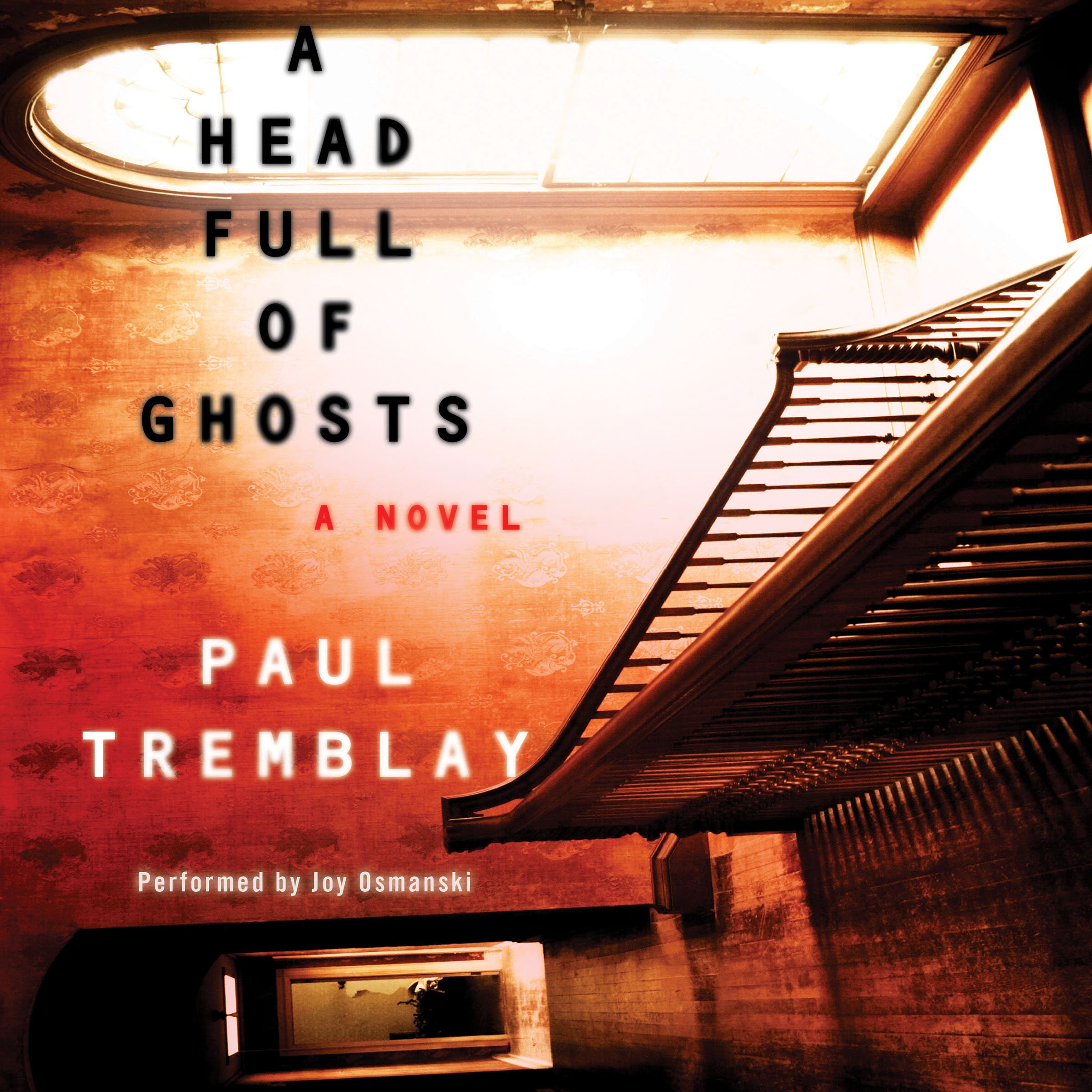
A Head Full of Ghosts
by Paul Tremblay
About this book
The Barrett family’s quiet suburban life shatters when fourteen-year-old Marjorie begins exhibiting erratic, disturbing behavior that defies medical explanation. As her condition spirals into apparent madness, her desperate parents find themselves caught between the cold clinical certainty of psychiatry and the desperate hope of faith. When a local priest suggests demonic possession, the family’s private agony is thrust into the public eye through a reality television show, *The Possession*.
Driven by financial ruin, the Barretts allow cameras to capture their descent, turning their home into a stage for a voyeuristic audience. Fifteen years later, the truth remains obscured by the lens of mass media. Merry, Marjorie’s younger sister, sits down for an interview to recount the chilling events of her childhood.
As she peels back the layers of her own fragmented memories, the line between supernatural horror and psychological collapse blurs. The narrative shifts between the sensation of the televised tragedy and the quiet, haunting reality of a family trapped in a nightmare. Through Merry’s eyes, the story interrogates the fragility of perception, the exploitation of human suffering, and the terrifying possibility that the greatest evils are not those that possess us, but those we invite into our homes.
Available Formats
What readers are saying
María J. EstradaBinge Read Worthy but Not Really Horror
"This is the third novel I read by Tremblay, after reading The Cabin at the End of the World and Survivor Song, and I was really hoping for a horror novel since Stephen King gave it such high praise and claimed it genuinely scared him. The story is a psychological thriller as the reader discovers whether 14-year-old Marjorie is really possessed, suffering from mental illness, and/or trying to save the family from financial ruin by having her exorcism documented on television. The ethics of that are disturbing, no doubt, and the reader is left to interpret what is really going on. Is the novel worth the read? Definitely. There are some scenes that are frightening, like when Marjorie starts cascading spaghetti and green vomit at the dinner table. (Yes, green vomit.) Passages like these, though cliche, are disturbing and echo The Exorcist and other possession stories. However, the way Tremblay plays with tropes makes the novel a great read. How Marjorie terrifies her sister with what she says and how she behaves toward her is horrible, especially since Merry adores her older sister. Like many possession stories, Marjorie speaks in numerous voices and struggles with voices in her head. She narrates awful stories to her Merry and sneaks into her bedroom in with seemingly supernatural abilities (I hoped these visits would lead to Marjorie doing something awful to Merry besides scaring her, but no). When Marjorie is being examined by a church psychologist, Marjorie spits obscure information, but is it the demon, or is Marjorie really good at researching online? One criticism I did have is that there is so much build-up to the exorcism, but it is short-lived. Again, Tremblay messes with the tropes. One of my favorite skills Tremblay has is that he does a masterful job of developing characters. He captures the voice of younger sister eight-year-old Merry beautifully. The parents, though not always likable, hit a nerve with the reader. I appreciate how they are diametrically opposed to each other with the father becoming a "born again" Catholic and the mother not believing. Like in his author novels, Tremblay traumatizes his characters in their quest for attaining their goals (which they don't always achieve), and he kills characters unapologetically, and the story works. Not many writers can pull that off without upsetting the reader, or doing it well. There's a smattering of social commentary every now and then. This one definitely delved into the role of popular culture, the misogynist treatment of women, and the decline of the middle-class family. As an academic, I love these sections. There are also a lot of allusions to horror novels and films, which as a horror fan, I loved and appreciated. Finally, get ready for a twist ending. It may not answer the question of whether Marjorie is possessed or not, but it is a great ending. I look forward to binge-reading more of Tremblay's work, but I won't set my expectations too high, on the horror front. ["
June 25, 2023 Verified Purchase
TraciInitially frustrated but, with some help from reviewer John, it keeps getting better...
"Changed my rating from 3 stars to 4 after a helpful exchange with John Anderson. I'm leaving the original post unchanged (elsewise, John's responses wouldn't make sense!) <<<SPOILERS>>> I was really looking forward to reading this book after seeing some very enthusiastic tweets and reviews, but I'm ultimately left a bit disappointed. First, let me say, it was a good read. The story kept me engaged and interested. However, it wasn't in the least bit scary. I'd put it more in the mystery genre, so if you're looking for a good scare, you know not to expect it from this book (unless the mere suggestion of the possibility of a possession is enough to give you the willies). It was the ending that left me feeling a bit duped. I thought I'd missed something that would have rendered it more meaningful or profound. So, I re-read the book, focusing on the words and recollections of Miss Merry and the deconstructions of Karen, looking for clues and for threads that would come together more clearly in the end. But, even after the second reading, I'm still feeling like all I got was the foreplay and the fornication, the feeling of building up to something, and then, phhbbt. No climax. No completion. I hate that in my fiction as much as I hate that in real life! I stewed over it for a few days, trying to figure out what had me so unhappy -- how would I have liked it to end or what would I have liked to have seen done differently? Did I leave feeling dissatisfied because I'm just too thick, I just didn't *get* what everyone else "got" about the book? I think what I'm missing is Rachel's narrative, during her sessions with Merry and afterward. The more objective take on what Merry's telling her, alongside the facts she's been able to gather in her research. And yet, I don't know that including more of Rachel's perspective on it all would have solved the real issue for me -- the suggestion in the very last pages that Merry herself is possessed (or was the cafe temperature suddenly and inexplicably plummeting *not* meant to suggest anything at all??? Who knows? I certainly don't know, still). We don't see any more of Merry or Rachel after that. We're not privy to Rachel's thoughts about what's just happened and what she's just learned. And that just leaves me....unsatisfied. Or maybe it was the lack of any clues leading up to the revelation (?) at the end. I put a ? because it's not much of a revelation when you can't look back and see how the pieces of the puzzle suddenly fall together upon hearing it. There's no "aha!" moment. It seems like a cheap shot. Oh, now I'm suddenly supposed to believe that Merry is possessed, when none of the preceding narrative so much as hinted at that possibility (unless you, like I, were bothered by the fact that you could never tell whether the first-person re-telling was coming from the grown-up Merry or from child-Merry, making me feel the whole way through that Merry's story had to be false, or mostly fiction, whether because she had been too young at the time of the incidents or because she herself is disturbed/possessed or just trying to milk her family tragedy for all it's worth -- because no one could remember anything in that much detail from a childhood experience, no matter how out-of-the-ordinary. (And I know that the author tries to solve this problem by having Merry herself tell Rachel in the beginning that she knows her memory is unreliable, that it's very possibly part real memory and part what other people have told her and part what she's seen in others' re-tellings of the "possession," but that ultimately does nothing to help me better understand what I just read and re-read. Because, here's the thing -- if it hadn't ended with the sudden drop in temperature, suggesting that Merry is possessed, I'd have been a lot happier with the book. Then, it would be a really interesting exploration of the mind and memory of someone who lived through a horrific childhood experience, a look from the inside at the production of a so-called "reality" show, and the after-effects of it all -- and that would have been enough. Even with questions still unanswered, mysteries still unsolved, it would have been enough because that's the actual reality of any person's memory from childhood, only amplified by the unique situation of Merry's particular memories. Then, the "possession" that's actually not a true possession but a likely schizophrenic breakdown aligns with so much of the text and narrative -- it falls in line with Marjorie telling Merry it's all an elaborate lie to try to get help for her parents, it falls in line with the production crew planting crude "special effects" and leaving the windows open on a frosty November night to get those ominous shots of the thermometer), it falls in line with all of the over-the-top horror genre stuff that the author through blogger Karen points out is thinly copied from all sorts of other possession stories, etc etc. But then to throw in that last-minute "twist" hinting at the possibility that Merry is actually possessed. Bah! It throws everything else out of whack!) It's just all too, too unclear. I don't need it all spelled out in the end and wrapped up in a big red bow, and I don't even need it to be crystal clear that yes, Merry was actually the one possessed (or she's now possessed -- hey, it runs in the family, but maybe not, since Marjorie kept telling her it was all an act, but then again, Marjorie did seem to be genuinely hearing voices that disturbed her, but that seemed to be the only thing truly "off" about Marjorie [aside from putting on the whole, elaborate act], so maybe it doesn't run in the family, so maybe Merry was the one possessed all along, but, no, there were never any suggestions that Merry was acting out in any frightening way and her parents did, after all, agree to an exorcism and a reality show, but but but) but I need more clues than I could find. That said, if Mr. Tremblay writes a sequel, I'll read it, by gawd. I'll read it, hoping to see the "after" bits -- Rachel going back through everything she's researched, with a new eye to what's in the police reports, and maybe some anecdotes from the Auntie who raised her after the incident, etc; does she publish the "truth" that Merry tells her, and, if so, what's the fallout; does Merry continue to have a chilling effect on every room she enters, and why? why why why???? Agghhh!!! My head hurts. ["
July 20, 2015 Verified Purchase
Matt GWell written, but disappointing
"-SPOILERS- This is the second Paul Tremblay book I've read, after Cabin at the End of the World. After reading both I can definitely say that he's a good, entertaining writer. His characters, especially the viewpoint characters, feel really developed and the books move along at a good clip. That being said, I really don't think he understands what ambiguity is. At the end of Cabin, I felt like it was pretty clear in the last few chapters that all of the apocalyptic stuff was really happening. I don't think that's because I was looking at the evidence for both sides and making a decision. It's the prose. He moves from the antagonists telling the main characters everything that's going to happen to just describing it from their perspective in very world shattering terms. It was only after reading it and then reading an interview with him talking about it that I realized he intended it to still be unclear at the end. I really don't think he pulled that off. This book is the same. If you read any reviews for Head Full of Ghosts, most of them will say that it's great but it's not very scary. That is 100% true. The "possessed" character says some kind of spooky stuff to her sister, but there's never any action that is scary. With this type of story, I feel like the main tension is trying to figure out if anything supernatural is actually happening. This book never really does that. I never had the sense that Marjorie was really possessed and I'm not even sure if I was supposed to. She doesn't do anything inexplicable or supernatural seeming. Even in the exorcism scene when drawers start banging open and the bed starts shaking, Marjorie shows you that it's fake in the scene. He doesn't even give you time to second guess your conclusion that it's a fake possession. All of the signs that the priest and the dad point to as proof seem very intentionally staged to make you shake your head about how misogynistic and self serving they are. Again, he doesn't even leave the dad and the priest open for interpretation. After he presents those scenes he has the blogger character come in and spoon feed you a breakdown to make sure you got it. The blogger character doesn't work at all. It might play a little better if you didn't find out after the first blog entry that it was written by Merry. The whole middle part of the book is just Merry's POV describing some pretty unambiguous scenes and then Merry as the blogger stepping in to break them down and make sure that you're following along. All of that makes the last scene in the cafe where the temperature drops really forced. Am I supposed to believe it means there really was a possession? Nothing up to that point makes you think any of it was real. It just doesn't work. I gave this book 3 stars because the writing, just line to line, is good and it did make me want to get to the end to see the resolution. But ultimately it falls kind of flat. I really don't get all of the rave reviews, it's not scary and the plot is pretty A to B. There's not a lot to unpack. ["
August 9, 2023 Verified Purchase
LukeA subversion to your typical possession story.
"I had never read a Paul Tremblay novel before this one, and knew very little about it except that it is a modern day The Exorcist with a twist and is supposedly one of the top 100 horror novels of all time, so I took a chance and picked it up. I feel like saying it's a modern day The Exorcist gives you the gist of the story enough that I don't really have to say much more, and saying much more would be giving too much away, so I will just dive in. The first thing I will say is that Tremblay's writing threw me for a loop at first. The book is formatted in a couple of different ways, the first being told from that of a blog writer talking about the television show that this case became. The blog chapters are extremely funny, I thought, and it was that sort of humor that I was not expecting. I am not accustomed to reading horror novels that have such obvious humor imbued throughout, so it took me a minute to get used to that, but I found that I really enjoyed it. The other half of the book is told in a first person recollection style from one of the main characters, and she is what you would call an unreliable narrator, in the same vein as that of Patrick Bateman from American Psycho. When I say that, I mean that the narrator will straight up tell the reader that they are not 100% certain that they are recalling certain events correctly, and that brings in the the chance for the reader to start to wander what is and what is not real about this story. Normally, that is something that irritates me, and is one of my chief complaints about American Psycho (even though I love that book), but it actually works here because you do still get some resolution despite the narrators often uncertainty. There is so much about this story to love. I truly like the way that the narrator, who at the time of the events occuring in this story, is 8 years old, and Tremblay writes very wonderfully how an 8 year old would handle this terrifying situation, and she still maintains that childlike wonder and the quirky happenings of children. She still wants to play games with her father during this terrible time, she still believes in the protective power of the 'traps' she sets around her room to catch intruders, and she becomes terrified of the carboard house she has built in her bedroom. The writing of a child in a terrifying situation is completely believable, and it makes it even more authentic to the author being unable to correctly recollect certain events. The rest of the cast has their ups and downs, though, and their motivations are slightly less black and white that Merry's (the narrator). Marjorie, the possessed sister, is probably the most complicated of them all, as she is just as unreliable as Merry herself, she just doesn't have a voice in the narration so we never really know EXACTLY what the truth is in her head. Merry's parents are not exactly stand up people, either- dad is an angry, anxious man fretting about money, and mom is a slightly heavy drinker who is angry about different reasons. It all works together beautifully, though, and the family dynamic really propels the story towards its shocking conclusion. This review has gone on longer than I expected, but I just can't say enough good things about this book, so I will deviate from the story itself and talk about this specific book itself. This is a PS Publishing copy, and I have come to really enjoy these ones and own several of them, not all just by Tremblay either. What I really enjoyed about this one is that it had bonus content in the back, and one of my favorites was a chapter-by-chapter breakdown from Tremblay himself talking about inspirations behind events and characters in each chapter. It was fun to read his little nods to other authors or characters from other books, such as one character named Navidson, who was named after Will Navidson from the book House of Leaves by Mark Z Danielewski (my favorite book). I really enjoyed that about this package and was disappointed to see that, out of all of the PS Publishing books I own, this was the only one that had that sort of breakdown. Anyways, I've said enough, but I will leave it at this: if you're a fan of haunted house, possession, or just spooky ghost stories in general, this is a great read, and I truly do recommend it to everybody. Solid 5/5. ["
April 27, 2026 Verified Purchase